

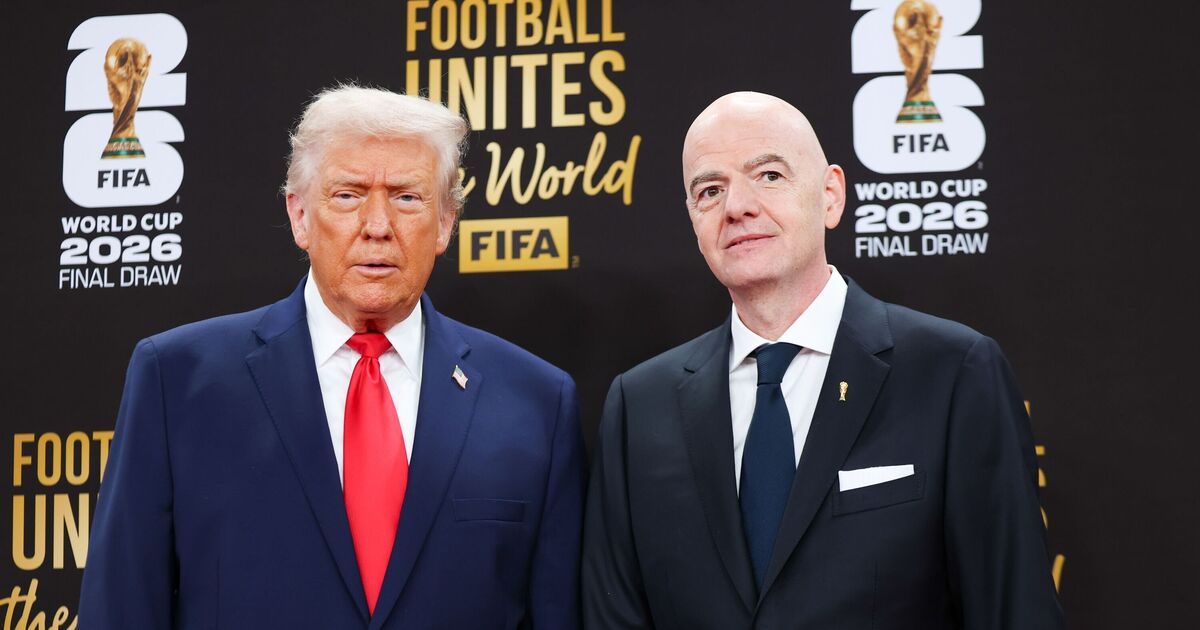

Donald Trump has slammed ticket prices for this summer’s World Cup. (Image: Getty)
Donald Trump is proud of his role in helping the United States host the 2026 FIFA World Cup during his first term in the White House. However, he was far from satisfied when he learned that American supporters would face exorbitant ticket prices to watch the US men’s national team play, and suddenly made his true feelings abundantly clear.
In a brief phone call with the New York Post late on Wednesday, President Trump reacted with apparent surprise when he learned that seats for the US’ group opener against Paraguay in Los Angeles on June 12 start at around $1,000 (£734.44).
“I didn’t know the numbers,” said Trump, who expects Italy to replace Iran at the World Cup. “Of course I’d like to participate, but to be honest, I won’t even pay.”
He suggested the administration might look into the issue more closely and expressed particular concern that the cost would crowd out working-class supporters who form his core constituency.
“I would be disappointed if the people of Queens and Brooklyn and all the people who love Donald Trump couldn’t go,” he said. “I want the people who voted for me to go.”
Express sports on FB! Get all the best sports news and more on our Facebook page
He stopped short of announcing specific interventions, but at the same time acknowledged the tournament’s commercial victory. “We know it’s been very successful. They’ve set every record in the book. They’ve never done anything like that before.”

President Donald Trump is talking about ticket prices for this summer’s World Cup. (Image: Getty)
The average price of a ticket to the final, to be played at New Jersey’s MetLife Stadium on July 19, is around $13,000 (£9,548), compared to the average price of a ticket to the 2022 World Cup final of around $1,600 (£1,175). One resale listing on FIFA’s own secondary market was listed for $2,299,998.85 (£1.67 million).
Speaking at the Milken Institute World Congress in Beverly Hills on Tuesday, FIFA president Gianni Infantino even joked about the latter figure, promising to personally deliver “hot dogs and cokes” to paying fans. He justified a broader pricing model by emphasizing the scale of demand.
“We are in the most developed market for entertainment in the world, so we need to apply market rates,” Infantino said. “The United States also allows ticket resale, so if you sell a ticket too low, it will be resold at an even higher price.”
Independent market data disputes this argument. Gilad Zilberman, CEO of secondary market comparison site SeaPick, told Deutsche Welle that as of the end of April, secondary market tickets were cheaper than FIFA’s own prices for 72% of matches for which comparable data was available.
“I think prices will go down. That’s my gut feeling. I think FIFA is struggling,” he said.
He characterized dynamic pricing as being beyond FIFA’s area of expertise, saying the organization was “stuck with a large amount of tickets” as a result. Data from the hotel sector reinforces the impression that the Games failed to achieve the expected influx of international tourists, despite moving a significant amount of tickets.
A report from the American Hotel and Lodging Association found that nearly 80% of hotels in the 11 US host cities underperformed initial World Cup expectations.
In Kansas City, 85% to 90% of operators said demand would not even reach a typical June or July period without a major event. Visa complications, soaring airfares and geopolitical instability have turned away international travelers, making the airline’s main customer base more domestic supporters who can afford lower prices.
