

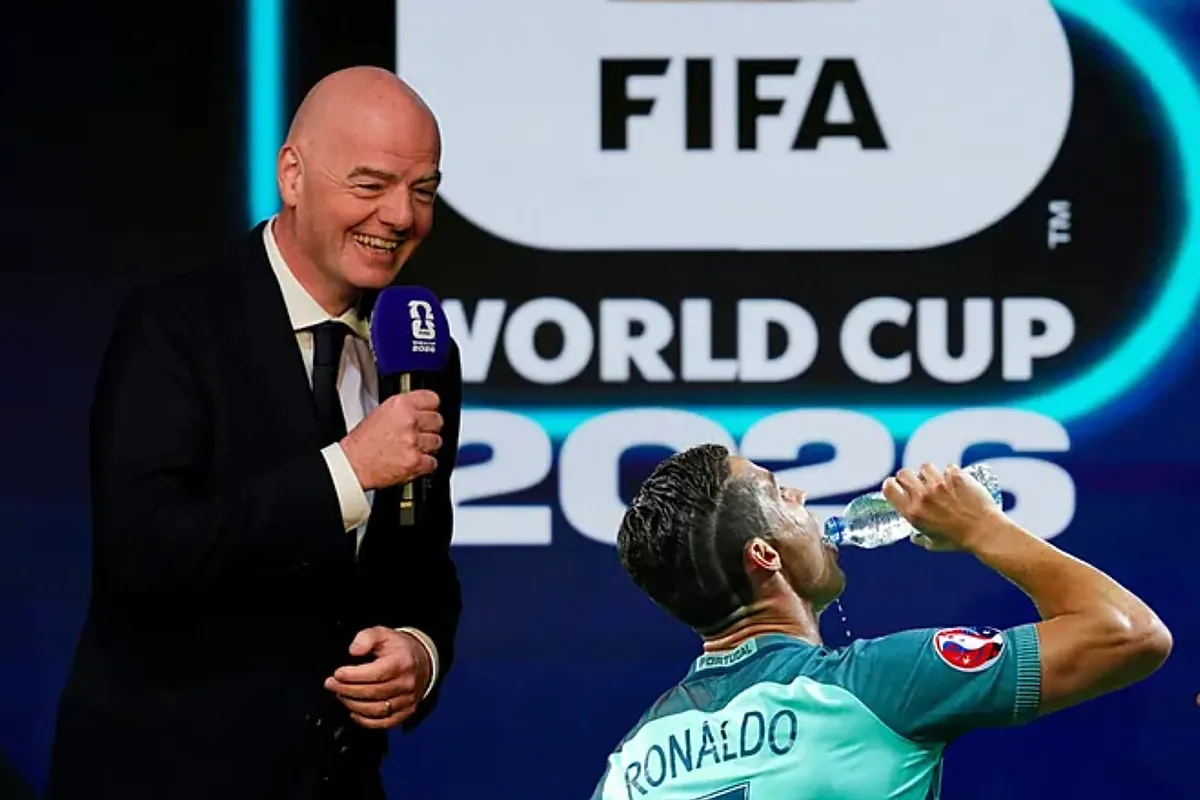
BPreviously, a “cooling break” only applied if the temperature exceeded 32°C. However, the measure, which has been implemented as a rule in almost every match since the Club World Cup, is reportedly proving commercially successful and will be extended until the 2026 World Cup. A mandatory hydration break between each half of a match is allowed by FIFA, which says it is a measure to protect players from the heat. Despite the high summer temperatures in Mexico City, Guadalajara and Monterrey, thousands of fans believe there are commercial interests behind this apparent concern over soccer players’ hydration.
Lionel Messi and Thomas Muller share unexpected verbal exchange during MLS final
Why will there be a hydration break at the 2026 World Cup?
This measure did not appear out of nowhere. Players and coaches have criticized the extreme heat in previous FIFA-sponsored tournaments, particularly the Club World Cup, which was held from June to July. Enzo Fernandes even admitted that playing in “very dangerous heat” makes him “dizzy”. Even manager Thomas Tuchel said substitutes may be left in the dressing room to avoid exposure to the weather.
In response to the criticism, FIFA announced that all matches at the 2026 World Cup will have a mandatory three-minute break, starting at the 22nd minute of the first half.
Regardless of the weather, every World Cup match includes a hydration break.
Previously, hydration breaks were only provided for matches in extreme heat, but from now on they will be a requirement for all World Cup matches, regardless of the weather. This was confirmed by FIFA tournament director Manolo Zubirria.
“There will be a three-minute hydration break for every game, regardless of where it is played, whether it is covered or not, regardless of the temperature. The final whistle will be three minutes long for both halves.”
The move raised the suspicions of thousands of fans who saw the hydration break as just an excuse to sell in-game advertising space.
The 2026 World Cup already comes with some controversial decisions, so fan speculation won’t come out of nowhere.
Tournament expanded to 48 teams and 104 games. Venues span the United States, Mexico, and Canada. Tickets have dynamic pricing ranging from $60 for the group stage to over $6,700 for the finals.
Recent examples such as the Club World Cup have shown that prices can fall significantly to fill stadiums, reinforcing for some the idea that this will become an increasingly commercial model.
While some players have admitted to drinking little during games, many fans wonder if these breaks really improve safety or just add unnecessary interruptions that can affect the spectacle of the sport.
