

England will face Argentina in a World Cup semi-final filled with history, animosity and the scars of more than 60 years of football.
Thomas Tuchel’s side face the reigning champions in Atlanta on Wednesday night in a game loaded with history, politics and national pride. Argentine players have already added fuel to their rivalry by chanting obscene songs about the Falkland Islands after reaching the last four.
Now, thousands of rival supporters are heading to Georgia, armed with flags, drums, old grievances and decades of anger. Police are bracing for a flashpoint in what could be the most explosive night of the tournament. There have already been minor scuffles between England and Argentina fans, including one inside a stadium in Miami during the quarter-final match against Norway.

England players advance to the World Cup semi-finals and will face arch-rivals Argentina in Atlanta (Image: MAURO PIMENTEL / AFP via Getty Images)
Atlanta will bring far more numbers, far more pressure, and far more hostility. On the pitch, 90 minutes could decide who plays in the World Cup final. But all around them hang the shadows of the Falklands War, Diego Maradona’s Hand of God, David Beckham’s red card and a rivalry that seems to create new wounds every time they play each other.
Few other matches in world football convey quite the same emotion. For Lionel Messi, this is also the last chance to conquer a major international opponent, something that has been lacking in his extraordinary career. The 39-year-old, and almost certainly playing in his final World Cup, is considered by many to be the greatest footballer of all time, but has never played against England in an international competition.
The Three Lions arrived exhausted but energized after a convincing victory over Norway, but it was Argentina’s post-quarter-final celebrations over Switzerland that threw Wednesday night’s match into chaos. Footage from the changing room showed the players chanting “Las Malvinas, Diego and Leo’s Ultimate” in preparation for the Falklands, Diego Maradona and Messi’s final World Cup. The chant dragged soccer’s most volatile rivalry into war in 1982.

Before Argentina’s players celebrated their win over Switzerland, footage from the locker room showed them singing a controversial chant referencing the Falkland Islands, Diego Maradona and Lionel Messi.
In Argentina, Las Malvinas remains a symbol of strong nationalism. Children are taught that the islands belong to Argentina. Maps depict the Malvinas as their territory, and stadiums across the country bear their name, despite being more than 1,000 miles from Port Stanley.
Although the overwhelming majority of Falkland Islanders voted to remain British, the controversy remains deeply entrenched in Argentina’s national identity. Football has become one of its most powerful expressions. Few countries invest more emotion into the World Cup. Maradona and Messi became almost sacred figures, carrying the hopes of a nation through political upheaval, economic crisis and rampant inflation.
The tournament’s unofficial anthem, ‘The Fourth Star’, culminates with the refrain: ‘For the Falklands, for Diego, for Leo’s last World Cup’. For many Argentines, a new title will mean more than just sporting glory. It would give Messi the perfect farewell and preserve a national story that continues from Maradona’s 1986 victory to the present day.

British troops during the 1982 Falklands War. The dispute continues to cast a long shadow over one of soccer’s fiercest international competitions. (Image: Imperial War Museum, via Getty Images)
But England are not alone in their bid to stop them. Across Latin America, support is increasingly gathering for Argentina’s opponents. From Brazil and Mexico to Chile and Uruguay, social media is full of fans openly declaring they want Lionel Scaloni’s side eliminated.
The slogan “America Latina Menos Argentina” (Latin America minus Argentina) became one of the defining chants of the World Cup. Some of that hostility comes with success. Argentina is the champion, the back-to-back winners and the dominant force in the region. However, the resentment deepens even further. The country has long faced criticism from its neighbors for touting itself as closer to Europe than Latin America.
Stereotypes of Argentines as arrogant or superior have persisted for generations and are rooted in a history of European immigration and debates over the erasure of indigenous and Afro-Argentine heritage. This perception was further reinforced by a series of ugly incidents. Argentina supporters have faced accusations of racist abuse during this tournament. The streamer was allegedly targeted during matches against Cape Verde and Egypt, with footage circulating showing monkey-like gestures directed at him.

Lionel Messi prepares to face England for the first time in an international tournament as the Argentina captain aims for his last World Cup before retiring (Image: Asahi Shimbun, Getty Images)
Another video showed Egyptian supporters being taunted and having beer thrown at them after Argentina’s dramatic comeback victory. The controversy echoes the storm that followed the 2024 Copa America victory, in which midfielder Enzo Fernandes livestreamed players singing a chant mocking France’s black players because of their African heritage.
On the other hand, political conflicts are only deepening the rift. After England eliminated Mexico from this World Cup, the famous Argentine TV presenter Eduardo Feynman declared: “I hate Mexicans, I hate them with all my heart…the envy they feel towards us, not just in football but in every aspect.” His comments sparked outrage across Mexico, with President Claudia Sheinbaum condemning them as “terrible”.
Many Argentines reject this portrayal, saying isolated incidents should not define the country of more than 46.6 million people. Some accept that difficult questions remain about racism and national identity. Whatever the explanation, Argentina have become the most divisive team of the tournament. Most of the continent now appears to want someone other than Messi to lift the trophy.
There’s no need to learn why this game is so important for England. At Wembley in 1966, a conflict erupted when Argentina captain Antonio Rattin was sent off by German referee Rudolf Kreitlein for “verbal abuse” despite not speaking Spanish. Lattin refused to leave the field, sat on the Queen’s exclusive red carpet, and was eventually taken away by police after damaging England’s pennant. England manager Alf Ramsey later branded Argentina’s players “animals” and refused to allow the team to change their uniforms.
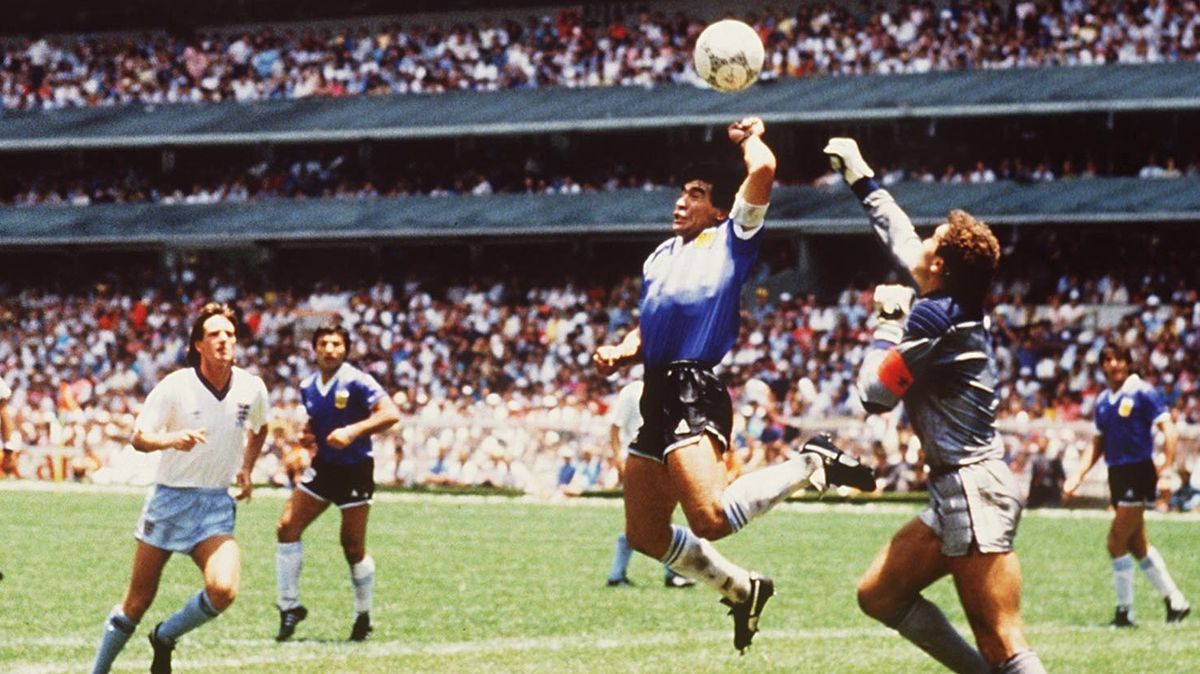
Four years after the Falklands war, Maradona used the Hand of God to punch the ball past Peter Shilton and minutes later scored perhaps the greatest goal in World Cup history. That defeat still burns with me.

David Beckham was shown a red card for kicking Diego Simeone during an awkward World Cup match against Argentina in France in 1998 (Image: Mark Leech/Offside via Getty Images)
England’s sense of injustice deepened in 1998 when Beckham was sent off for kicking Diego Simeone before Argentina won on penalties. The former Three Lions captain redeemed himself four years later, converting a penalty to seal England’s victory in Japan.
Now, the next chapter is waiting to be written, and we both know it could be the most dramatic yet. Forward José Manuel López, whose hometown Corrientes suffered heavy losses in the Falklands War, said: “From the fourth line of the pitch to the outside, this is a clash with a lot of history, a lot of pain and a lot of events behind it. I don’t think we need any more motivation.”
Defender Cristian Romero vowed, “I will give my soul to the match against England. It’s soccer, you can win and you can lose, but I will risk my life on the pitch to reach the final again.” Head coach Scaloni tried to keep the temperature down by insisting, “This is a football game. The message is this is a football game.” Few will believe him.
More than 15,000 England supporters are following their team to Miami, with thousands more heading to Atlanta. Argentine expeditionary forces once again turned American cities blue and white. They will face each other in stadiums filled with noise, anger and fear. A place in the World Cup finals is at stake. England and Argentina will also have history to settle. When these two countries meet, soccer is never just soccer.
