

Experts say climate change is at the heart of the issue threatening players and fans at games in the United States, Canada and Mexico.

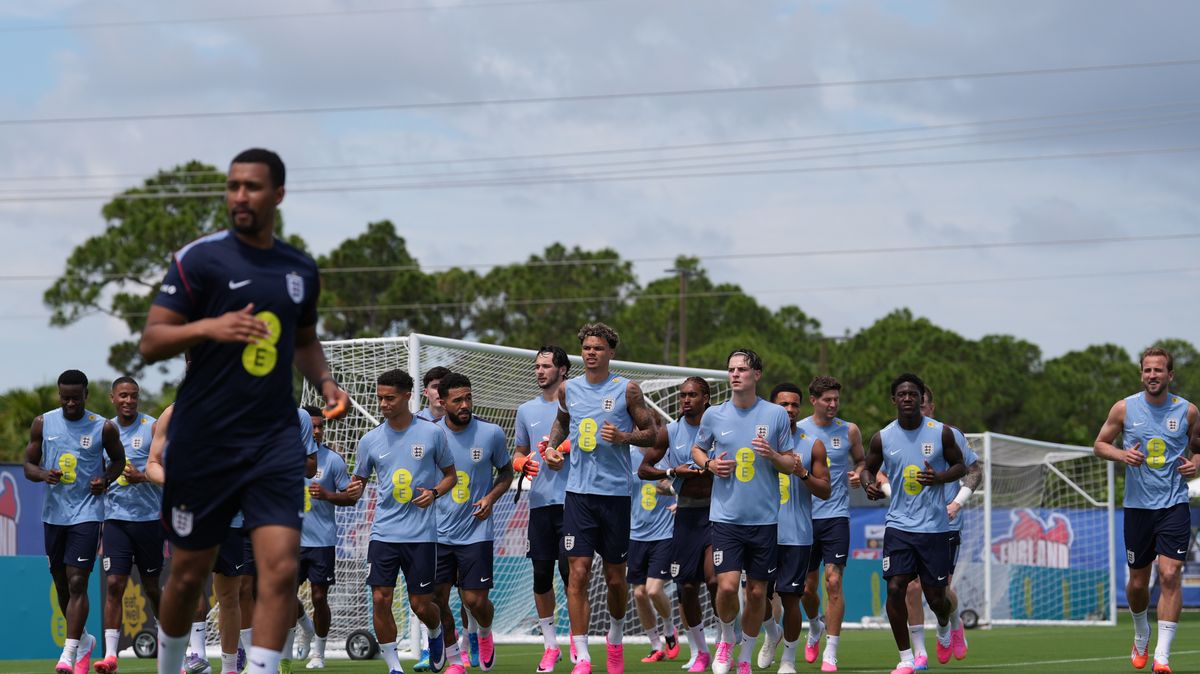
England players jogging during a training session in Palm Beach Gardens, Florida (Image: Associated Press)
World Cup stars have been warned they could be at risk of “heat stroke” and other serious health risks this summer.
England’s star players are said to be at risk due to dangerous temperatures, humidity and extreme weather conditions. Experts say climate change is at the heart of the issue threatening players and fans at games in the United States, Canada and Mexico.
The United Nations Climate Change states that weather, climate and conditions will pose a major threat, arguing that it is a direct result of climate change.
They warn:
‘Hot weather’ conditions have doubled since the 1994 US World Cup Experts believe 26 of 104 games will be played in ‘dangerous heat’ 5 games could be played in ‘postponement level’ heat Miami, Kansas City and Philadelphia are most at risk, but semi-finals and final in New Jersey are at risk World Cup matches will be delayed due to extreme heat Exhaustion, which limits players and their performance and requires more substitutions.
Get the latest 2026 World Cup news in your inbox with our Make Football Great Again newsletter
“We’re all watching the game and it’s been canceled because it’s too hot,” said Simon Steele, the United Nations climate change chief.
“It’s hot for the players, it’s hot for the fans, it’s hot for everyone. It’s hot and it’s getting hotter. It’s no coincidence. That’s climate change. After more than a century of burning fossil fuels like coal, oil and gas, the Earth is heating up. That traps heat in the atmosphere. And now we’re feeling it everywhere.”
“On the pitch, it means more heat, more fatigue at every level, from the highest level of international football to the grassroots game. Decisions are harder, reactions are slower and players and fans are in the red zone. And it’s not just the things we love, such as football and many other sports, which are under severe pressure from global warming. It’s also the things we need, such as food, as global warming hits crops and drives up prices for everyone.”
“Sport is the world’s greatest unifying force, and soccer is the world’s greatest sport. If people who love soccer speak up to protect soccer from the effects of climate change, such as extreme heat, it will make all the difference. Because this is not just about saving the sport. Because it’s about protecting the world that sports depends on, the world that we all depend on. So the next time you see a drink break or a game delayed due to extreme heat, remember why: Coal, oil and gas are warming our planet.
“And remember this: The health of the game and our world depends on the choices we make now.”
Malik Tillman, a midfielder for the U.S. national team, added, “We know that wildfires are becoming more frequent, and that’s because of climate change. We as humans have to adapt certain things to ensure that future generations can still enjoy those memories and protect the sport that we all love.”
Since the Club World Cup, FIFA has introduced heat breaks, revised kick-off times and used three indoor stadiums.
We also engaged with the Players Association Group after the Club World Cup, after FIFPro raised significant concerns about the dangers and threats of temperature during matches.
Join our new WhatsApp community and receive Mirror Football content every day. Community members also receive special offers, promotions, and advertisements from us and our partners. If you don’t like our community, you can check it out whenever you like. If you are interested, please read our privacy notice.
