

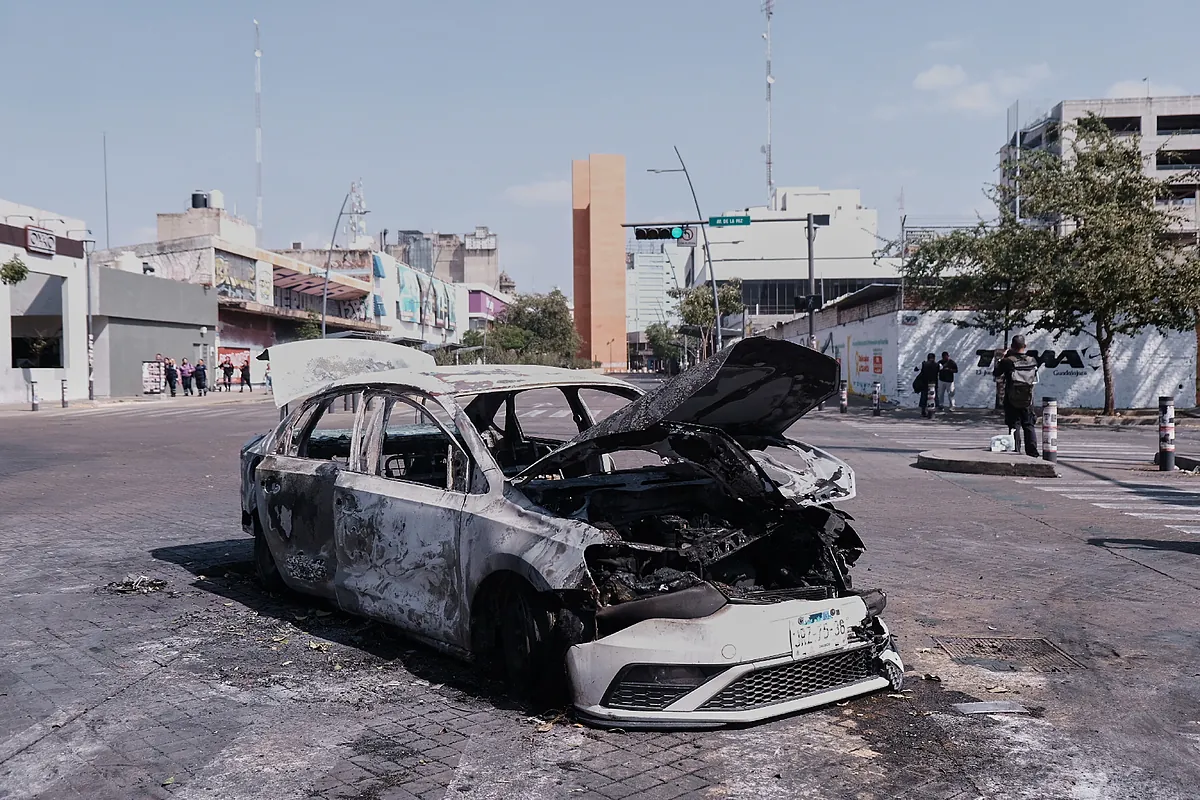
GHuadalajara, which was scheduled to host four matches at the 2026 FIFA World Cup, was thrown into turmoil after Mexican federal forces confirmed the death of Nemesio “El Mencho” Oseguera Cervantes, believed to be the head of the Jalisco New Generation Cartel (CJNG).
El Mencho, considered one of the most wanted human traffickers by the U.S. Drug Enforcement Administration, had a $15 million bounty on his head.
The unrest stems from a federal operation in the town of Tapalpa that targeted one of Mexico’s most notorious cartel leaders, according to Mexican officials and multiple international news organizations.
The impact was immediate, setting off barricades, disrupting transportation and prompting a series of unusual advisories issued by the U.S. and Canadian governments.
There was gunfire and chaos at Guadalajara International Airport, with residents reporting passengers running and hiding as smoke billowed from the runway.
Authorities suspended public transport and urged residents and tourists to stay indoors. Stranded visitors shared footage online showing the rooftops of crowded hotels and streets strewn with debris from burning vehicles.
Liga MX and Liga des Expansins officials were already feeling the immediate effects of Sunday’s unrest.
Scheduled games, including the high-profile women’s league game between Chivas and Amrica and the Expansin Tournament game, have been postponed “due to the situation in the city,” the league said in a statement.
The CJNG was founded in 2009 and is widely considered one of Mexico’s most violent criminal organizations.
The United States officially designated it a terrorist group, linking it to the trafficking of cocaine, heroin, methamphetamine, and fentanyl.
World Cup security under the microscope
In recent months, Mexican authorities have invested heavily in surveillance systems, aerial surveillance and ground patrols, particularly in and around Guadalajara.
Preparations in the months leading up to the violence included installing thousands of surveillance cameras and deploying anti-drone technology aimed at thwarting threats at fan events and during matchdays.
However, recent flashpoints have brought renewed scrutiny to whether those measures are sufficient.
Local media reports said the incident “casts doubt on the guarantees that the organizing committee can provide” ahead of the World Cup.
Authorities have issued “red alerts” in several municipalities, urging residents and commuters to avoid traveling due to safety concerns.
Guadalajara remains a key venue for the 2026 FIFA World Cup. Games scheduled in the city include South Korea vs. UEFA Playoff Winner (June 11), Mexico vs. South Korea (June 18), Colombia vs. Intercontinental Playoff Winner (June 23), and Uruguay vs. Spain (June 26).
Security has been stepped up at all World Cup venues and plans are in place to protect players, fans and residents in the lead-up to the tournament.
El Mencho’s death highlights the continuing challenges Mexican authorities face in combating organized crime and the lengths to which cartels may retaliate.
For now, residents and visitors to Guadalajara and surrounding states remain on high alert as authorities work to restore stability.
