

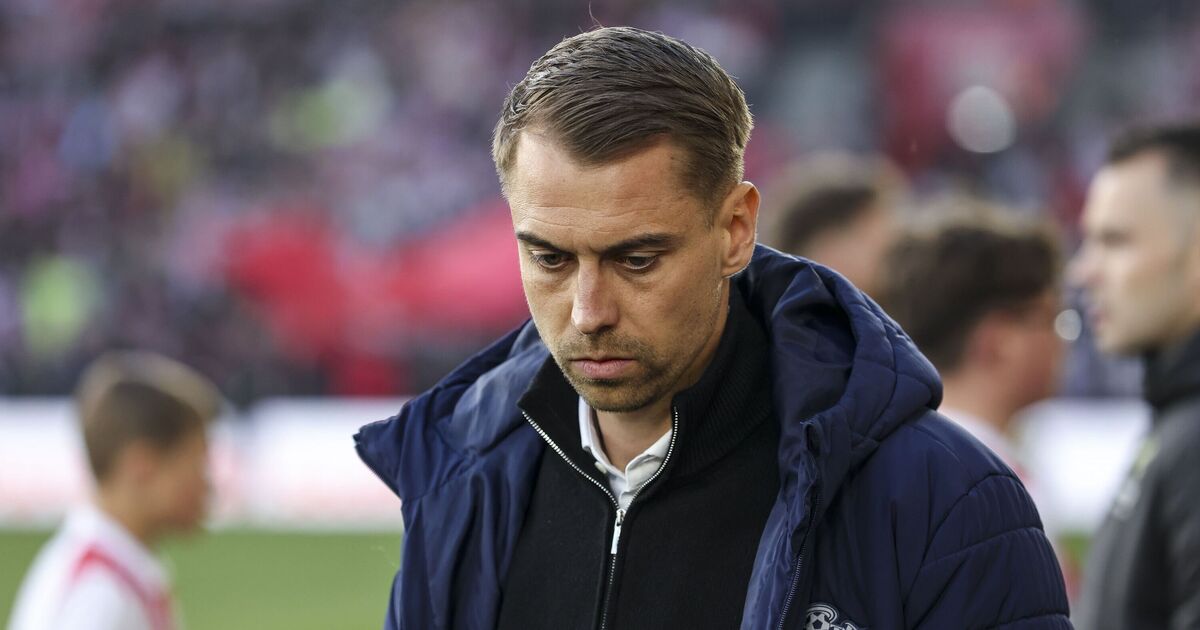
Tonda Eckert will remain as Southampton manager following the Spygate scandal that shocked the British football world. This comes after Saints were kicked out of the Championship play-off final for spying on Middlesbrough before the semi-final. At the hearing at the time, he also admitted carrying out similar tactics against Oxford United and Ipswich Town during the regular season.
Southampton have also been handed a four-point penalty by the EFL, which will come into effect at the start of the 2026-27 season. Text messages between staff are reportedly believed to have provided incriminating evidence of systematic espionage within the club. Eckert was said to have taken on the responsibility of spying to better understand the opposing team’s selections and tactics.
The 33-year-old now remains in his job, with Southampton admitting they have no plans to sack Eckert despite calls for accountability at the club.
Club owner Dragan Solak told the BBC: “I think he deserves a second chance and I’m going to give him that. In fact, I’m going to support him with all my might, because I think he’s a very talented manager.”
At his first hearing, Eckert reportedly explained that he did not know he was breaking the rules because the practice is widespread in continental Europe, where he gained coaching experience.
However, EFL Regulation 127 strictly prohibits observing an opponent’s training within 72 hours after a match. Southampton were also found guilty of breaching EFL Regulation 3.4, which covers failing to act with the utmost good faith towards other clubs.
When he scouted Ipswich before a 2-2 draw in April, his strategy included wearing an Eastleigh shirt as a disguise. Ipswich were training at the non-league club’s home base in Hampshire ahead of the match.
The incident began when performance analyst intern Will Salt was captured by a member of Middlesbrough’s media team while filming a training session ahead of the play-off semi-final.
Images showed Salt recording on his mobile phone from behind a tree at Boro’s training facility. He was eventually caught in the act, sparking one of the biggest scandals in English football history.
Southampton immediately appealed the EFL’s decision to ban them from the play-offs and impose a point deduction, with chief executive Phil Parsons claiming the penalty was “clearly disproportionate” to the offending.
“We say this not to downplay what happened at this club, but because we recognize that it was wrong. We say this because proportionality itself is a principle of natural justice,” he said in a statement.
“The committee was entitled to impose a sanction. We would argue that it had no right to impose a sanction that was clearly disproportionate to any previous sanction in the history of the English game.”
