

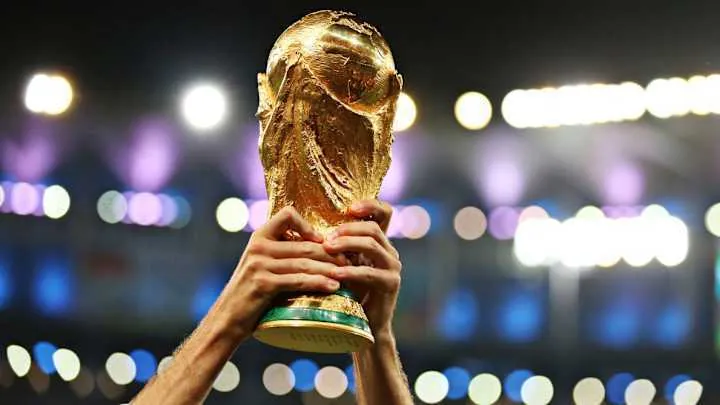
TThe FIFA World Cup has long been the stage where legends are born, and its history shows that greatness can emerge at any point in a player’s career. From teenage phenoms to veterans, this tournament has produced iconic moments that transcend age.
Nowhere is this better illustrated than by Pele and Dino Zoff, who represent the youngest and oldest champions in World Cup history. Pele’s breakthrough in 1958 remains one of the most remarkable stories the sport has ever seen. At just 17 years old, he entered the Swedish tournament as a promising but relatively unproven talent.
By the time it was over, he was a global star and a key figure in Brazil’s national soccer team’s first World Cup victory. Pele scored six goals in the tournament, including two in the final against Sweden, showing a level of composure and technical ability rarely seen from a player of his age.
His performance wasn’t just about winning the title. It redefined expectations for young players on the biggest stage. Pele became the youngest World Cup winner in history, a record that still stands. Throughout his career, he won the tournament three times, cementing his status as one of the best players the game has ever produced. His emergence in 1958 marked the beginning of a new era for Brazil, setting the standard for what young talent could achieve in international football.
Lamine Yamal’s games fit into any music genre, and this video proves it
Italian player becomes oldest to win World Cup
More than 20 years later, Zoff provided a completely different example of excellence. When he won the championship as captain of the Italian national soccer team in 1982, he was 40 years old, an age when most players have long since retired. As a goalkeeper, Zoff relied more on positioning, experience, and decision-making than physical explosiveness. Those qualities proved invaluable throughout the tournament.
Italy’s 1982 campaign was defined by resilience and tactical discipline, with Zoff serving as the backbone of the team. His leadership from the backline provided stability in moments of pressure and complemented the heroics of goal-scoring Paolo Rossi. Zoff’s performance in the knockout stages, including crucial saves in close matches, led Italy to the title and secured him a place in history as the oldest player to win a World Cup.
The contrast between Pele and Zoff highlights the unique nature of this tournament. One was a teenager who played with fearless creativity, and the other was a veteran who relied on decades of experience. Both approaches proved equally effective in delivering football’s ultimate prize.
There are different paths to greatness
Their accomplishments reflect how the World Cup embraces different paths to greatness. It provides an opportunity for young players to showcase themselves to the world in a way that other competitions cannot. For older players, it provides an opportunity to leverage their experience and leadership to pursue the final milestones in their careers.
In today’s game, where physical demands are higher and careers are more tightly controlled, it remains difficult to match the records of the likes of Pele and Zoff. Yet their stories continue to resonate because they capture fundamental truths about football. Success at the highest level is not determined by age, but by performance when it matters most.
From the 17-year-old prodigy who led Brazil to their first title to the 40-year-old captain who helped Italy win, the World Cup proved that greatness can emerge at any stage of a career.
