

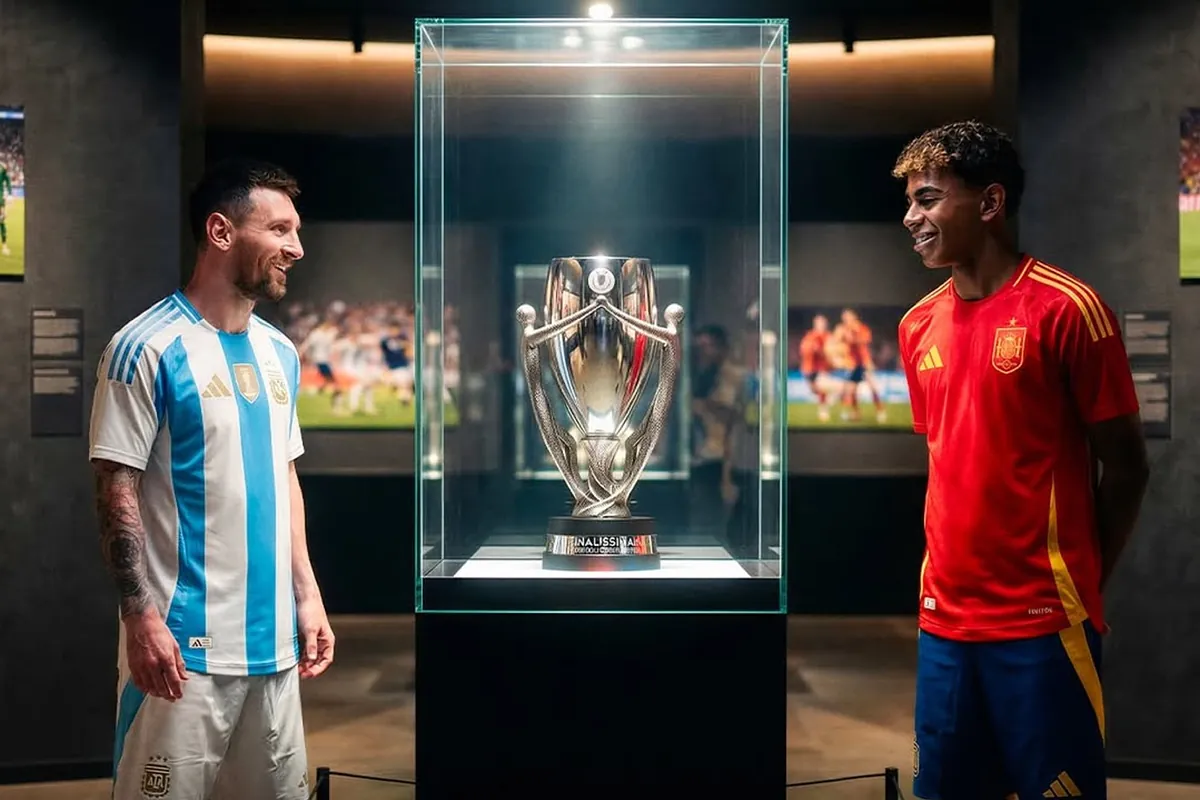
EThe escalation in regional conflicts has not only canceled high-profile clashes, but also disrupted the global sports calendar and raised doubts about future events.
This spring’s biggest showcase of intercontinental football, the Spain-Argentina Finalissima, will not take place as scheduled on March 27, 2026. The match was officially canceled due to the deteriorating geopolitical situation in the Middle East and the inability of UEFA and CONMEBOL to relocate or reschedule the match.
What happened to Finalissima?
The 2026 Finalissima was scheduled to feature European champions Spain and Copa Amrica winners Argentina at Qatar’s Lusail Stadium on March 27, but was canceled after efforts to adapt to the changing situation failed.
UEFA considered multiple alternatives, including:
Use a common ticket to move the match to Madrid’s Santiago Bernabé, hold it in a two-leg format (one in Spain and one in Argentina), or choose another neutral European venue.
None of this was accepted by all parties, especially the Argentine Football Association. Argentina offered to play after the 2026 World Cup, but Spain had no space on their calendar. As no agreement could be reached, UEFA officially canceled the event.
Reason for cancellation: widespread disruption
The official reason given by UEFA, “security concerns and lack of viable alternatives”, is directly linked to the ongoing Middle East conflict which is disrupting airspace, travel and the local security situation in the Gulf region. The conflict has affected multiple major sporting events, not just soccer.
Could this impact the 2026 World Cup?
As of today, there is no official indication that the 2026 FIFA World Cup, scheduled for June-July in the United States, Canada and Mexico, will be canceled or postponed. Football’s global governing body is actively monitoring geopolitical developments, but the location and duration remain the same.
The cancellation of the Finalissima is being treated as a precautionary response to an interim security and logistics crisis in the Gulf region, rather than as a direct threat to the World Cup.
However, Turkish and Iranian officials have publicly questioned the participation of their national teams due to domestic pressure and security concerns, but these views are not reflected in FIFA’s official announcements.
What it means for teams, players and fans
The showdown between Messi and Yamal will not take place this spring. This matchup is seen by many as a key storyline heading into the World Cup. Fans who were planning a trip to Finalissima need clarity on refunds and arrangements. Many are still waiting for decisions from ticket sellers, travel companies and federations.
The national team loses a high-profile, competitive tune-up match months before the sport’s biggest tournament. Outside of motorsport, the Asian Weightlifting Championship in India was postponed as a precautionary measure against tensions in the same region.
