

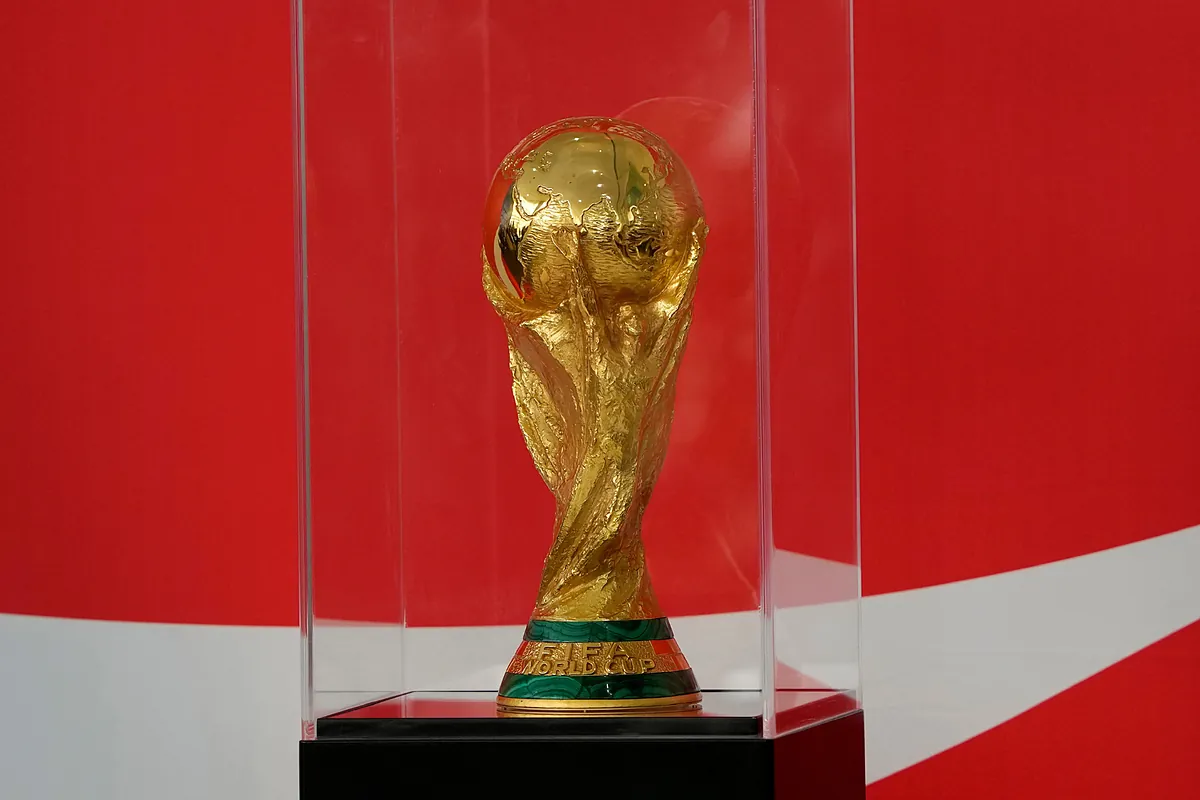
TThe situation with the Iranian national soccer team has increased uncertainty ahead of the 2026 FIFA World Cup. There are still many doubts about their participation, but if they decide not to participate they will join a small group of countries that declined to participate in the World Cup after qualifying.
The reasons range from political conflicts to institutional decisions to economic issues, but all have led FIFA to reorganize its competitions.
Teams that declined to participate in the World Cup
In fact, before Iran, it all started with the 1934 World Cup. There, reigning champions Uruguay refused to travel to Europe for the second tournament because they had not participated in the first tournament on their territory.
Austria also joined this list, but for other, more complex reasons, they had qualified for the 1938 World Cup in France, but ultimately did not compete after being annexed by Nazi Germany in the so-called Anschluss.
Argentina’s absence was felt at that World Cup as well. Argentina refused to participate in protest against the organization, as the tournament was held in Europe for the second time in a row (previously the 1934 tournament in Italy), at a time when South America was anticipating a continental rotation.
Then, one of the most memorable incidents occurred during the 1950 World Cup in Brazil. India were eligible to play, but there are two theories as to why they were absent. One claims that FIFA’s decision to ban barefoot play was the main reason, while the other claims that the federation decided not to travel because of high travel costs and a desire to prioritize the 1952 Olympics. But they weren’t the only ones absent from this World Cup.
The Scottish Football Association (SFA) stipulated that teams would only qualify for the World Cup if they won the English Championship. Despite not being able to play, Scotland did not play despite having already qualified. Turkey, which had been excluded from international competitions during World War II and had participated in Germany’s place, did not participate due to the economic and logistical costs of an expedition.
Another most interesting case was the Colombian case. The South American team withdrew from the 1986 World Cup in Mexico, which was originally scheduled to be held and had qualified. After the tournament was canceled in 1982 due to economic crisis, rising infrastructure costs and national security concerns related to drug trafficking, the tournament moved to Mexico.
These historical examples have been revisited as the current political and diplomatic situation has made Iran’s participation in the 2026 World Cup uncertain. If Iran ultimately misses the tournament, it will join these teams and go down in history as one of the most memorable episodes in recent decades in the organization of football’s most important tournament.
