

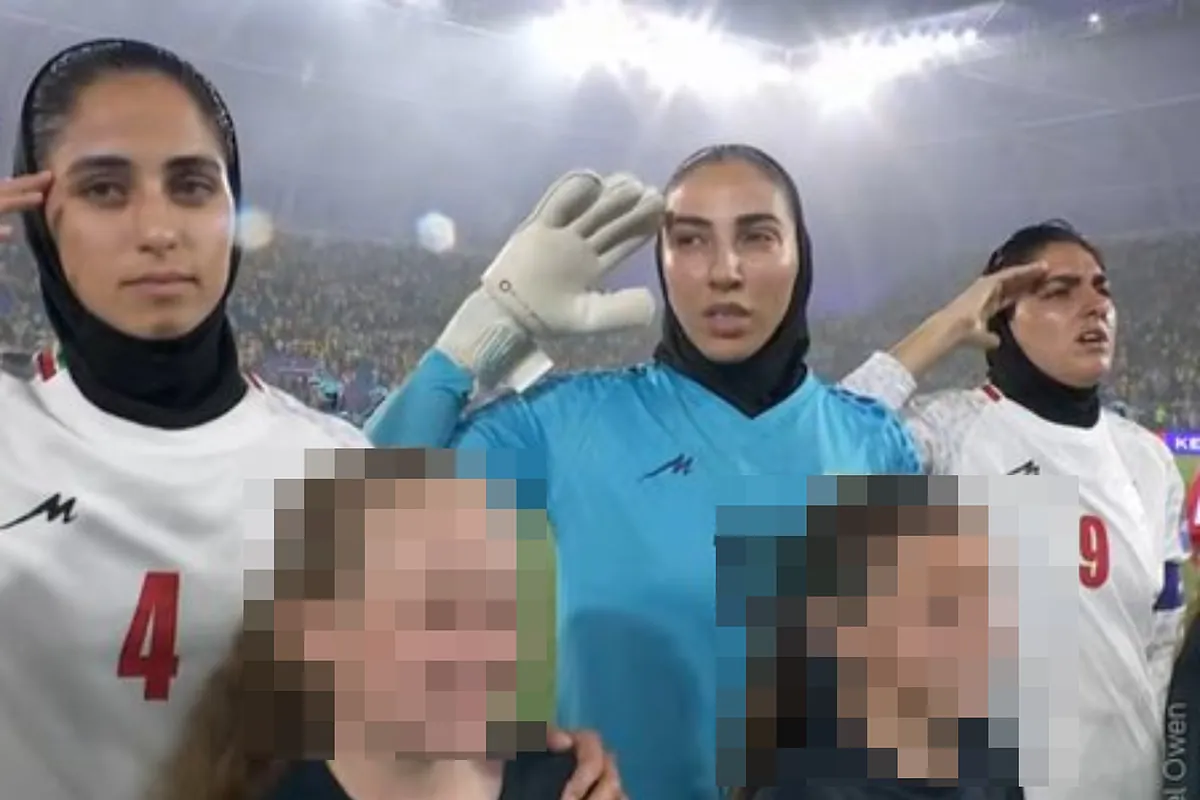
TPensions are high for the Iranian women’s soccer team, whose Women’s Asian Cup campaign ended with a 2-0 loss to the Philippines, and concerns are growing over the safety of the players if they return home after Australian protesters surrounded the team’s tour bus.
About 50 demonstrators, some waving lion and sun flags, blocked a bus leaving a Gold Coast stadium on Sunday night, highlighting growing concerns that women could face serious repercussions in Iran.
Iran’s lion and sun (Shiro Khorshid) flag, which was used before the 1979 Islamic Revolution, has become a symbol of defiance against the current regime, and protesters raised it to demand protection for the players and their families.
The women’s refusal to sing the Iranian national anthem early in the tournament drew international attention.
Authorities suspend flights after drone attack near Dubai airport
And that backlash has fueled fears that they could face imprisonment or even death upon returning home, and that their relatives could also be potentially at risk.
Foreign Minister Penny Wong said Australia stands in “solidarity” with the Iranian women’s soccer team, reaffirming Australia’s responsibility as host nation and calling for urgent measures to ensure safety.
Australia supports Iranian women’s team
Thousands of Australians have signed a petition urging the government to act, warning that athletes face an “impossible situation” and stressing that forcing them to return could put their lives and the safety of loved ones at home at risk.
“These concerns are urgent and serious. During the opening game, members of the team reportedly remained silent during the Iranian national anthem,” the petition reads.
“Credible reports have also raised concerns that regime officials have been integrated into the delegation, with players not being allowed to move freely and communication being restricted.
“Australia is hosting this tournament, and with that comes not only a logistical responsibility but also a moral responsibility…Just because they have shown conscience, dignity and fear in public should not force them to return to a place of danger.”
Iran War Latest: What we know as US continues bombing Middle East
A week after the United States and Israel launched attacks on Iran, the conflict continues to escalate, with more than 1,332 deaths reported in Tehran.
Rising regional tensions will impact Gulf states, airspace, and oil production across West Asia.
Several Gulf states, including Qatar, Kuwait and the United Arab Emirates (UAE), reported incoming missiles and drones, with Qatar saying its air defenses had intercepted nine out of 10 drones.
Saudi Arabia also thwarted multiple threats near Riyadh, with its military systems on high alert.
Aviation disruptions forced Qatar Airways to operate special repatriation flights to European cities, and Kuwait began cutting production from its oil fields due to storage shortages, reflecting the growing economic and logistical impact of the conflict.
US President Donald Trump is reportedly considering sending special forces to secure Iran’s bomb-grade uranium stockpile, with officials citing concerns over the whereabouts of the nuclear material as regional security risks continue to rise.
Iran’s military has warned that continued Israeli attacks would target oil infrastructure in the region, raising tensions following attacks on storage and fuel supply facilities, raising fears of further escalation in an already volatile region.
