

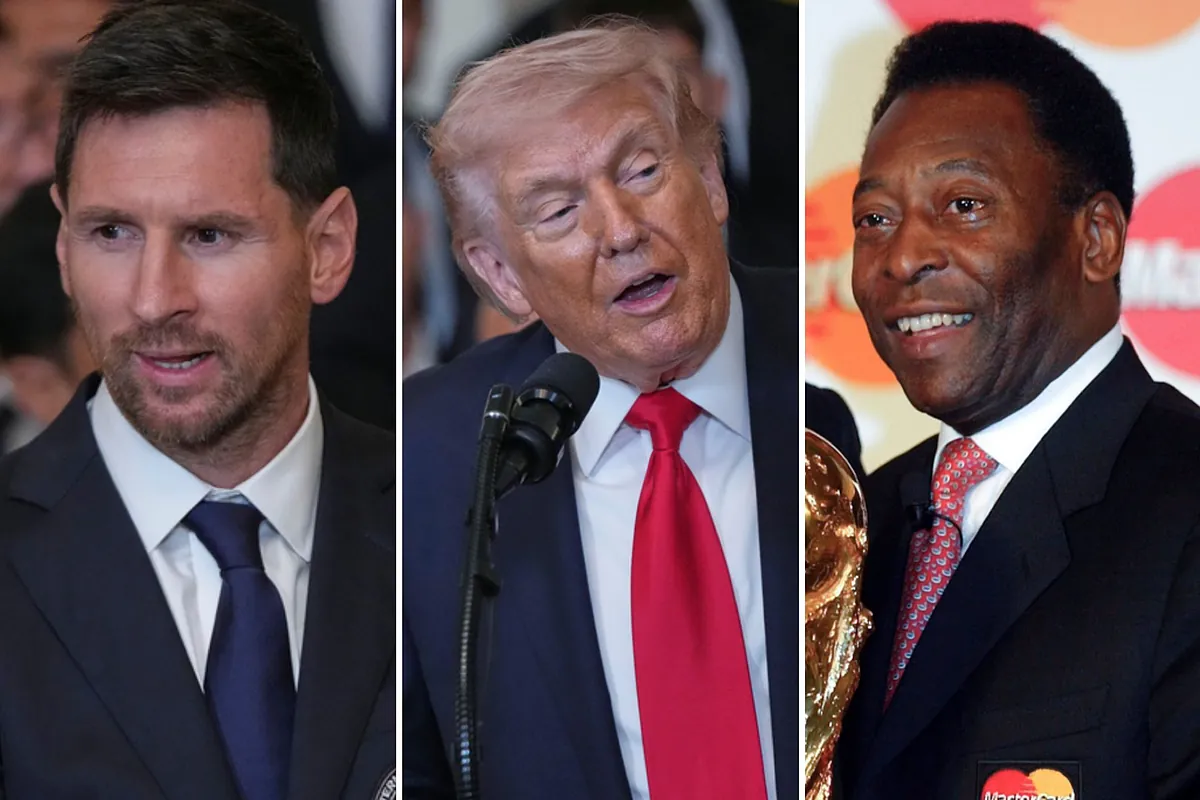
a The question that has long divided fans – who is better, Lionel Messi or Cristiano Ronaldo – has taken an unexpected turn. This time, Donald Trump changed tack and asked Inter Miami CF players who was better: Pel or Messi. This change sparked a whole new debate and put Messi in the middle of a generational conversation.
Several teammates were quick to support Messi, but the Argentina star stood nearby, clearly uncomfortable. But beyond the momentary awkwardness, the question revived a larger conversation that the football world has struggled to answer for decades. The question was: Who is really the GOAT?
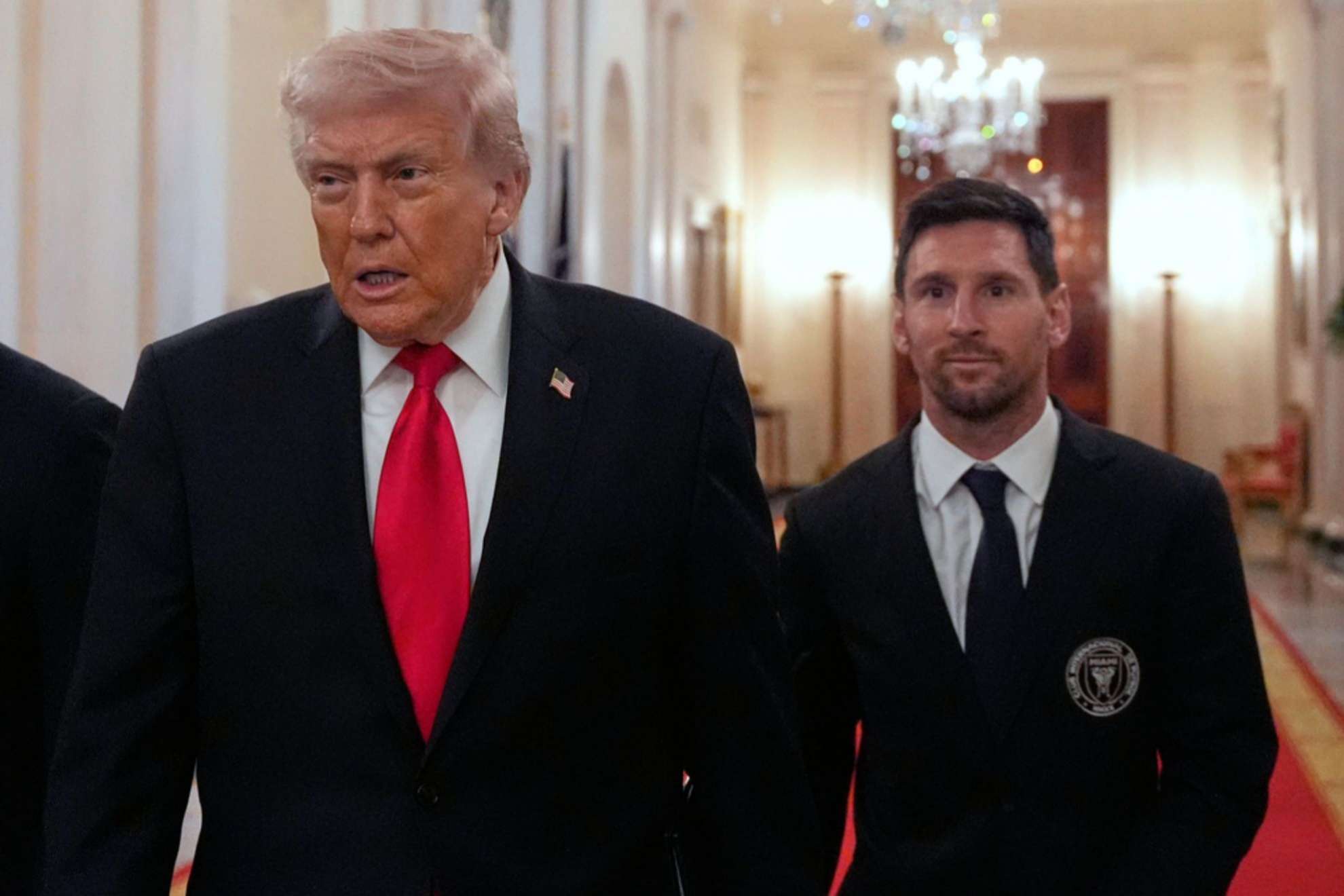
Donald Trump changed the subject and asked Inter Miami CF players who is better, Pell or Messi
Comparison after 30 years
One of the main challenges when comparing Messi and Pell lies in the simple fact that their careers belong to completely different eras of football.
Pell spent most of his career with Santos FC from 1956 to 1974 and finished his professional career with New York Cosmos from 1975 to 1977. By the time the Brazilian legend left Santos, the world football landscape was vastly different from the 21st century.
Messi, on the other hand, made his professional debut with FC Barcelona in 2004, almost 30 years after the end of his time with Pel Santos. This gap alone complicates direct comparisons. Soccer has evolved dramatically during these periods, from tactical systems and defensive structures to sports science, global broadcasting, and the commercial scale of the sport.
While Pell reigned in an era when international tournaments and domestic leagues had different structures, Messi has built his career in an era of intense global scrutiny, advanced analysis and weekly competition with elite teams from Europe’s top leagues.
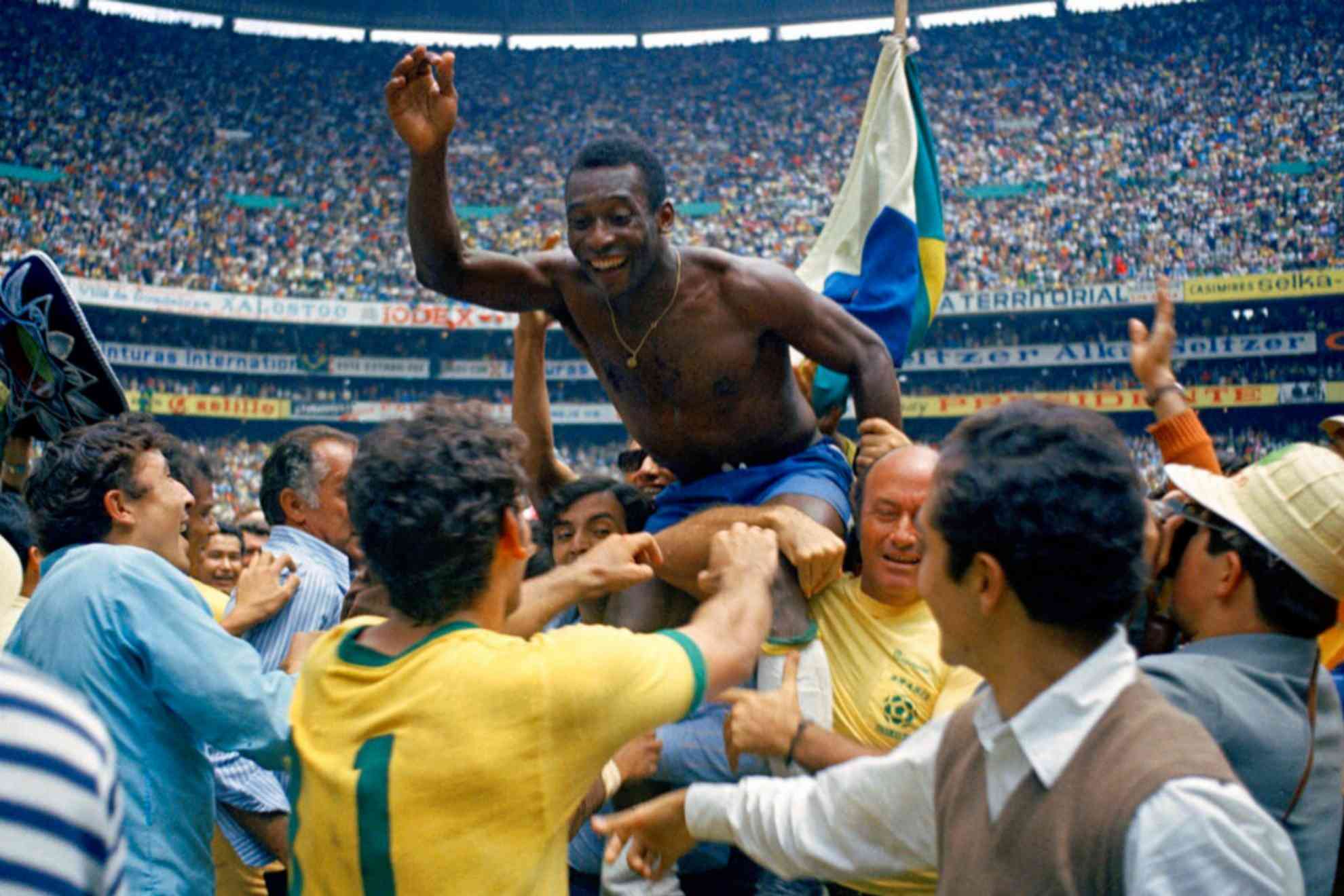
Brazil’s Pele is carried on the shoulders of his teammates after Brazil’s 4-1 World Cup final victory over Italy at the Estadio Azteca in Mexico City, June 21, 1970.
A record that connects two distant eras
Despite decades apart, Messi and Pell occasionally cross paths through statistical milestones. In December 2020, Messi equaled Pel’s long-held record for most goals scored by a single club, reaching 643 goals with Barcelona, which was the same number of goals Pel scored with Santos.
That moment came 46 years after Pels left Santos, and not only showed how far off their career timelines actually were, but also highlighted Pels’ extraordinary accomplishments at a time when soccer was not played the way we know it today. Even in an era without modern sports science, global exposure, or sophisticated tactics, Pell’s dominance is still remarkable.
Messi’s career has already lived through one GOAT debate
For most of the past two decades, Messi’s achievements have been defined by comparisons to another modern-day legend, Cristiano Ronaldo. Unlike the Pell debate, the Messi-Ronaldo debate developed naturally. Both players competed in two rival teams during the same era, often appearing in the same competitions, breaking records and winning trophies in Spanish and European football at the same time. This direct rivalry made it easy for fans to frame comparisons.
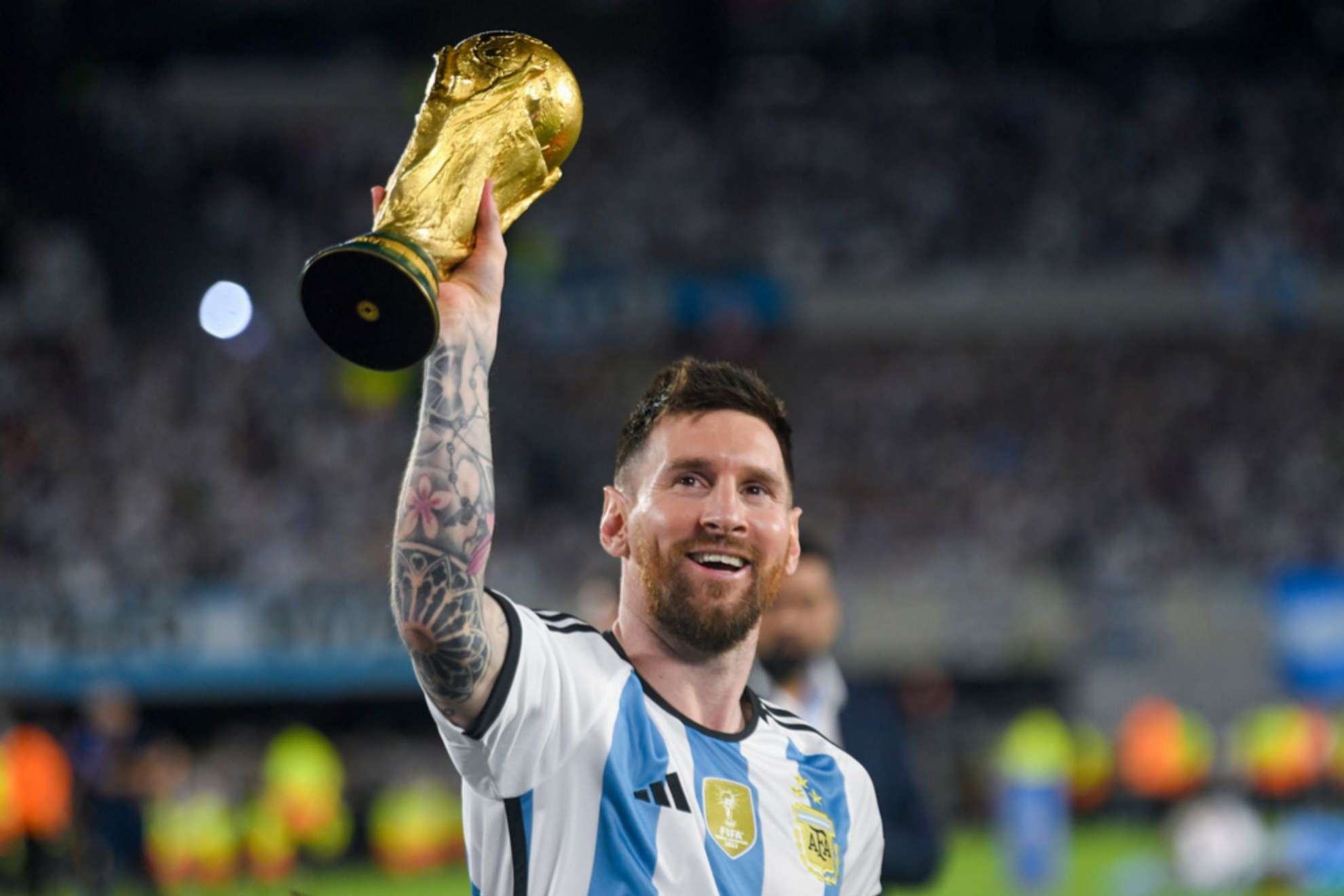
Messi has built his career in an era of global attention.
But the Messi-Pell controversy belongs more to soccer history than a direct rivalry. Pell became the global face of the sport in the 1960s and 1970s, winning three World Cups with Brazil and changing the international appeal of soccer. Decades later, Messi made a name for himself with his dominance at Barcelona before cementing his international achievements by winning the 2022 World Cup with Argentina. Each defined their own generation.
Probably never-ending debate
Supporters are often forced to choose one ‘greatest of all time’, even if the players involved performed in radically different circumstances. Comparing two players from different eras becomes even more complicated as there are so many factors to consider. Soccer is no longer played the same way. The game became faster and more physical, and the distribution across the field changed. Defensive structures have become stronger and scoring is no longer the responsibility of one player. In Pell’s era, offensive systems often revolved around one or two superstars, but today’s games are more balanced, tactical, and collective. All these factors make direct comparisons nearly impossible, but the debate continues nonetheless.
Trump’s viral question may have been brief, but it reminded fans that the conversation about soccer’s greatest players will likely never end. Pell represented the apex of an era. Messi represents another pinnacle. And for many in soccer circles, it may be the closest the sport has ever come to a definitive answer.
