

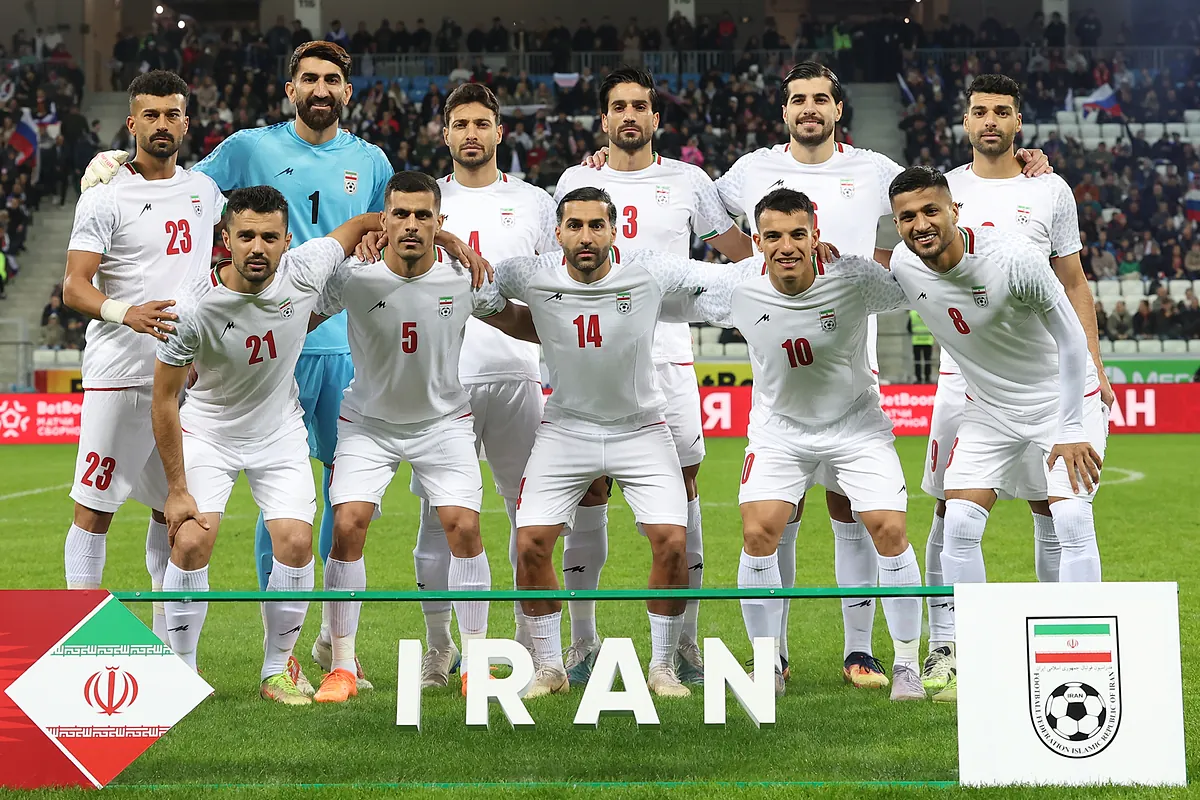
Iran’s participation in the 2026 World Cup has suddenly been clouded by uncertainty after US and Israeli airstrikes against Iranian targets heightened tensions across the region.
Mehdi Taj, president of the Football Federation of the Islamic Republic of Iran, acknowledged that he does not know whether the national team will ultimately be able to play in the United States as scheduled.
“What I can say for sure is that after this attack, we cannot look forward to the World Cup with any hope,” Taj told Iranian sports outlet Varzesh 3 as Iran and Israel exchanged attacks in the rapidly escalating conflict.
The military escalation following the killing of Ali Khamenei has plunged Iran’s political future into uncertainty and raised concerns about prolonged instability in the region. This instability is now spilling over into the world of sports, with one of the world’s biggest tournaments attracting unexpected geopolitical attention.
Ronald Arrajo makes a monster slide that surprises his Barcelona teammates
Iran is included in Group G for the upcoming 2026 FIFA World Cup and will play all three group stage matches on American soil.
The team will play New Zealand in Los Angeles on June 15th, Belgium on June 21st, and then Egypt in Seattle on June 26th.
Complex features for fan and FIFA monitoring
The tournament will run from June 11th to July 19th and will be co-hosted by the United States, Canada, and Mexico. Although the match remains on the official schedule, Taj’s comments highlight how quickly the situation could change if the diplomatic or security situation worsens further.
Even before the current conflict, a complicated situation existed for Iranian supporters who wanted to attend games in the United States. Iranian nationals were previously included in travel restrictions announced during the Trump administration that restricted their entry into the country.
The new hostilities could further complicate visa approvals, security checks and logistics plans for players, staff and fans.
FIFA has not made public whether a contingency plan is being discussed. The governing body said it was closely monitoring developments in the region, but did not answer questions such as the situation in Iran or whether alternative venues would be considered if tensions escalated.
The uncertainty has added an emotional strain to what is supposed to be a period of preparation and anticipation for Iran’s players and coaching staff. The World Cup is not only a sporting milestone, but also a valuable opportunity for national unity and international engagement. Taj’s comments suggest that optimism has been replaced by anxiety, at least for now.
The fate of Iran’s World Cup campaign remains uncertain as diplomatic tensions continue and military exchanges unfold. Whether Group G goes as planned by the United States may ultimately depend less on soccer and more on how the geopolitical crisis unfolds in the coming weeks.
