

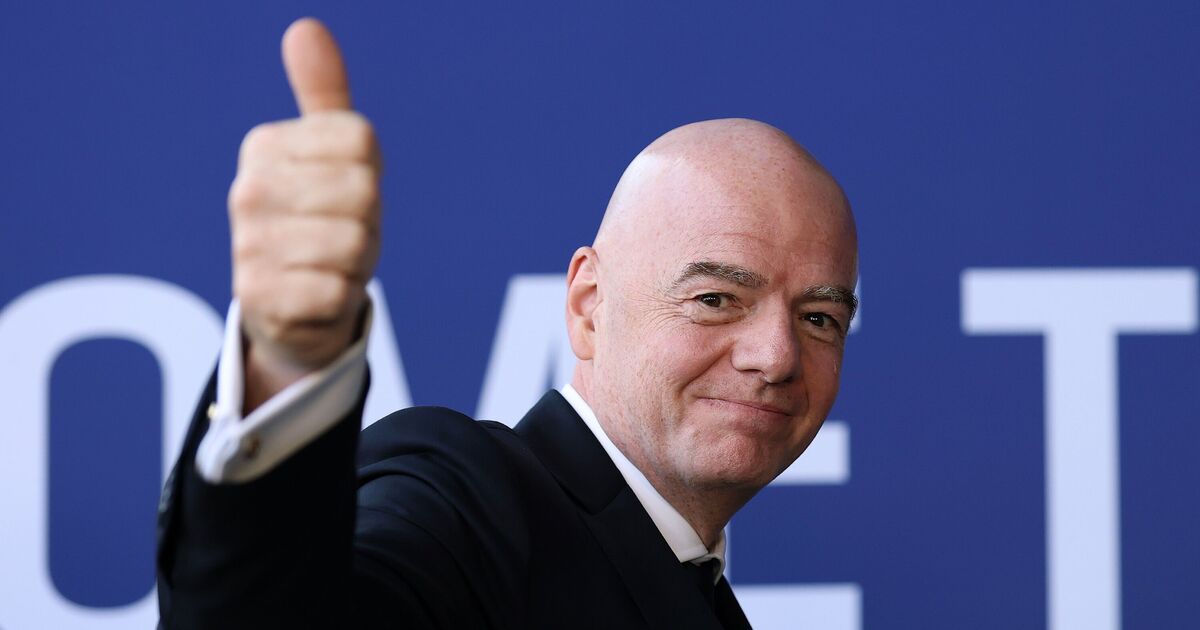

Gianni Infantino will be in the World Cup final. (Image: Getty)
Why can’t the BBC and ITV stop showing Gianni Infantino in World Cup matches?
The global broadcast feed used by all international networks is controlled by the Host Broadcast Service (HBS). Under contracts with FIFA, production staff are required to show certain “key shots” during matches, and the BBC and ITV have no say in this matter.
These mandatory filming guidelines stipulate that the primary feed must show a dignitary at least once in every half. This policy ensures worldwide visibility for FIFA leaders and their distinguished guests.
FIFA’s official stadium ranking classifies the most elite attendees as VVIPs. This highly restrictive group includes state leaders, the head of World Football Federation, and major celebrities.
Infantino is a mainstay of these VIP sections, as he often takes private planes between matches to watch as many matches as possible. His unrelenting schedule essentially makes him a prime target for these mandatory broadcast cuts.
In past tournaments, such as Qatar 2022, broadcast directors have operated based on very specific instructions regarding the FIFA president. He was expected to be filmed, but broadcasting what he was looking at on his cell phone was strictly prohibited.
The filming strategy is designed to project a specific image of Infantino as an enthusiastic and devoted fan. As a result, the cameraman actively looks for moments where he is reacting to the game, rather than sitting around in a daze.
When asked about these strict broadcasting practices, FIFA representatives insisted that showcasing VIPs was simply standard industry practice. The group denied it had its own directives giving Infantino preferential treatment over other high-ranking guests.
Regardless of FIFA’s explanation, these frequent cuts have caused widespread backlash and ridicule from soccer fans around the world. Viewers regularly voice their frustration when live matches are interrupted to show footage from the stands.
Stadium directors often choose not to show Infantino on the arena’s big screens to avoid humiliating audio recordings on the global feed. This tactical internal censorship prevents the collective booing in the stadium from spilling over into the television broadcast.
