

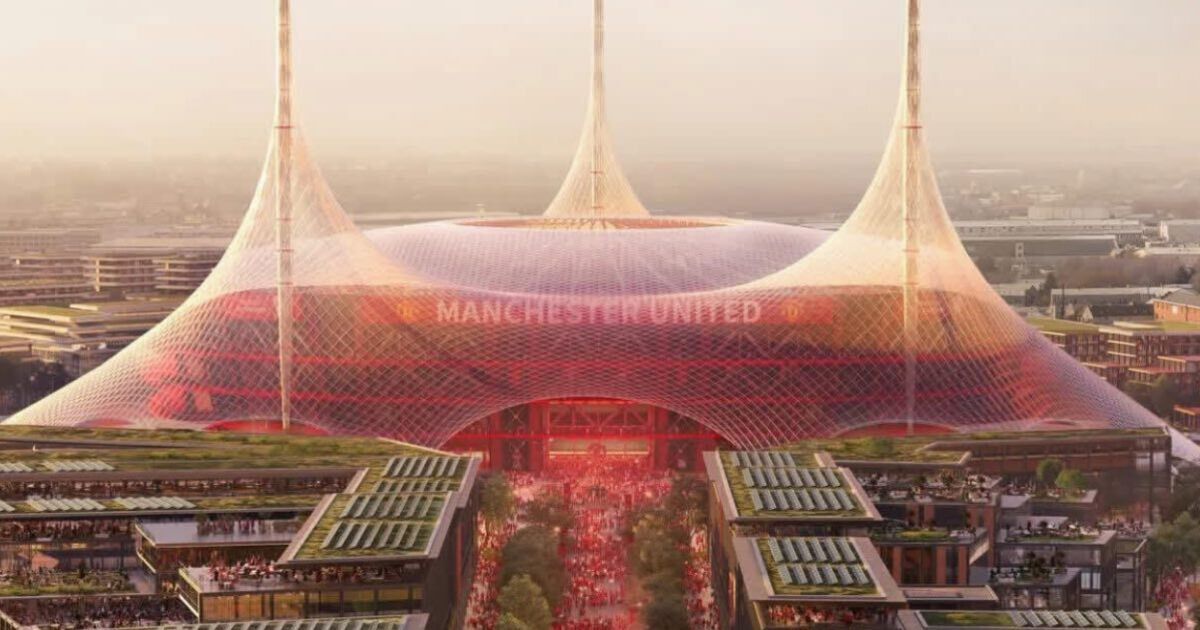
Manchester United have announced that their new 100,000-seater Old Trafford will be built privately, with “positive conversations” continuing between potential investors and interested parties. Sir Jim Ratcliffe had previously floated the idea of taxpayers contributing to the £2bn scheme.
Unveiling plans for the new stadium, United co-owner Ratcliffe said: “People in the north pay their taxes. There is an argument that we could consider more ambitious projects in the north that would be suitable for England, such as a Champions League final or an FA Cup final.”
The club had not publicly confirmed its funding strategy, although Manchester Mayor Andy Burnham had made it clear that the stadium itself would not receive any public funding. This changed after a United spokesperson said at a recent fan forum: “Our proposed new stadium will be privately financed and we continue to have positive dialogue with potential investors and all interested parties.”
The development has raised the prospect that United could reach unprecedented levels of debt to finance the new stadium project. In February, United announced their second quarter results, which surprisingly showed the club’s debt was approaching the £1.3bn threshold. In August, soccer finance blogger Swiss Lambre ranked Everton and Tottenham ahead of United on the debt table, although both clubs have taken out loans to build new stadiums. United estimate a new Old Trafford will cost around £2bn, which could theoretically increase their debt to around £3.3bn.
Mr Ratcliffe has cultivated political connections with a view to building a new 100,000-seater stadium, but questions remain over whether his comments on immigration have had a negative impact on relations with the government. At the fan forum, United were asked about potential concerns about deteriorating relations between governments at both local and national level, and the impact this would have on the construction of a new stadium.
The club responded: “Our strong relationships with local and national government have been built over many years. The Old Trafford regeneration project has strong stakeholder support. “This is a project that not only builds the best football in the world, but also supports major national economic growth. This is a once-in-a-lifetime opportunity to build a transformative program that will deliver 15,000 new homes, including affordable homes, create 48,000 jobs locally and over 90,000 nationally, and generate a long-term economic contribution of £7 billion a year to the UK economy.”
United have confirmed that the appointment of Colette Roche as ‘Chief Executive Officer for New Stadium Development’ is a significant milestone. “She has been closely involved in our progress to date towards building the new stadium and her appointment formalizes that commitment,” the spokesperson said. “This new role allows Colette and the club to focus more clearly on what we have to deliver: the best football stadium in the world. This is a clear sign of commitment and an important step forward in moving from vision to delivery.”
Before United can proceed with any stadium proposal, they need to secure an agreement to acquire the rail yard surrounding Old Trafford. The site is owned by Freightliner, and negotiations over the deal have stalled.
