

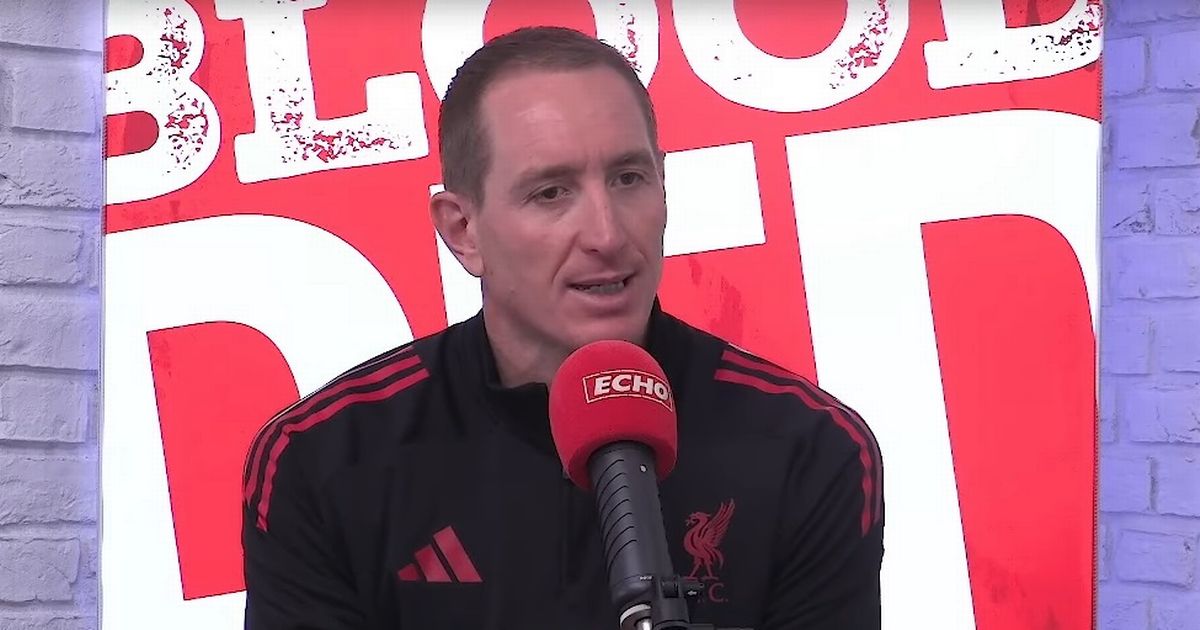
Former Liverpool goalkeeper Chris Kirkland opens up about his battle with addiction and mental health that ended his career.

Chris Kirkland achieved that dream, but the latter half of his football career and the years after his retirement were a living nightmare.
A Liverpool supporter since he was a boy, the former England international was just 20 years old when he joined his beloved Reds and became Britain’s most expensive goalkeeper in August 2001.
He spent five seasons at Anfield, making 45 appearances and helping the club famously win the 2005 Champions League on their way to Istanbul, defeating AC Milan on penalties after an incredible comeback in the greatest European Cup final ever. Although an unforeseen injury ultimately prevented him from becoming Liverpool’s first choice, he can look back on his Reds career with pride.
read more: I quit Liverpool for Aston Villa – Harvey Elliott’s return won’t solve his problemsread more: 11 big stars will miss 2026 World Cup after Manchester United trio and Liverpool stars are eliminated
In 2006, he moved to Wigan Athletic and enjoyed the best years of his career as the Latics’ number one for four seasons in the Premier League.
However, after joining Sheffield Wednesday in the summer of 2012, Kirkland’s wheels started to spin. Although he was already battling anxiety, it was during his time with the Owls that he developed an addiction to painkillers for the first time and felt his life was in danger.
“It took me 10 years to admit the truth,” the 44-year-old exclusively told Bloodred, the new monthly magazine from the Liverpool Echo and Reach PLC. “Yes, I retired in 2016 for mental health reasons, but I never talked about my addiction until three and a half years ago.
“People say you should never have regrets, but for me the most important thing is that I didn’t say it sooner. I kept it to myself in 2012 and 2013, especially when I started really struggling with addiction.
“And that affected me for the next 10 years. I obviously had to retire from football at 35. I could have continued. I was healthy enough, but mentally I was in shambles and that’s what the addiction did.”
Kirkland has been open about her struggles with addiction and depression in the years since hanging up the gloves.
But he is now set to tell his story in his autobiography, “Keeping It Quiet” – The Chris Kirkland Story. And ahead of its release, published by Terrace Tales on November 17th, the 44-year-old exclusively sat down with Blood Red for a candid interview.
“The hardest thing to do is admit that you’re struggling with anything,” he says. “It took me quite a while to finally hit rock bottom.
“It’s very hard to quit, and almost impossible without the support of those around you. Addiction is very hard. It takes over your life. It’s the first thing you think about in the morning and the last thing you think about at night. Addiction is very hard.”
“I knew right away that I was an addict, but until then you have to feed your addiction. Addiction is one of the most powerful things that controls everything. I was planning when to take them, where to take them, where to hide them, when to get them, where to go from. They end up on the Internet and on the black market. That’s how addiction works.”
“And you know it’s wrong. You know what you’re doing is wrong. It’s almost impossible. I’ve tried to stop myself so many times, but you always come back because you know you can get away with it and you know that no one else knows.”
“That’s why I came out and told the world. It wasn’t for pity, it was just for the fact that I didn’t want a place to hide.”

Given his struggles with injuries throughout his career, it would be easy to assume that such issues were the cause of Kirkland’s painkiller addiction. But that’s only part of the story. Rather, it was the insecurities that followed his move to Sheffield Wednesday that ultimately led him down his darkest path.
“I went to Sheffield on Wednesday, which was my routine of being away from home, away from Liverpool, commuting, and I was nervous,” he recalled. “I just didn’t want to leave the house.
“Five years at Liverpool, six years at Wigan, same house, same routine, having my daughter, dropping her off at nursery, dropping her off at school, going to the school play, walking the dog in the afternoon, everything I was used to has gone.
“Because I was in the car going to and from Sheffield. I just couldn’t cope with all the changes other than football. Football is still the same, training is the same, but everything else has stopped and I’m starting to feel anxious about leaving the house.”
“I had a little bit of a tingle before the first game because I was anxious, so I got some medication and it helped reduce my anxiety.
“So I thought that when you do something and feel good, whether it’s right or wrong, people keep doing it. So that’s what I did. And I thought, ‘I’ll take this with me when I go to Sheffield and when I’m away from home.’
“But addiction hits a person quickly. Yeah, it was (because of the injury), but I was taking them to relieve anxiety. They’re not meant to do that, so it’s infuriating.”
“Some people feel sick, some people can’t stand it, some people feel good. But they eased my anxiety and made me feel relaxed. So I was hooked right away.
“After about 3-6 months (I knew this was bad), it was the last thing I thought about at night and the first thing I thought about in the morning. I know you’re addicted, but then after a few days of trying to quit, the withdrawal symptoms were terrible.
“So, I kept going, and no one knew about it, so it just escalated. I ended up taking well over 2,000 milligrams a day. The maximum amount I should be taking is 400 milligrams a day, and I’m not supposed to take it for long periods of time.
“I had well over 2,000, plus what you could buy over the counter at a pharmacy. One wasn’t enough, two wasn’t enough, three wasn’t enough.
“So you just keep adding and adding and adding. The amount I was taking, they should have killed me. They said my fitness helped me take that amount. But the amount I was taking, it definitely should have killed me.”

Kirkland joined Bury in June 2016, but decided to leave the club before the start of the season and hang up his gloves as he continued to battle demons.
For the next six years, he was on and off drugs, struggling with addiction, retirement and the coronavirus pandemic. But everything changed in April 2022, after a bad reaction to some medications left Kirkland worried he was going to die.
“I retired in 2016. I didn’t want to do anything anymore,” he recalls. “I didn’t want to live. They messed me up. Everything was just a headache.
“I couldn’t think straight. I didn’t want to do anything. I didn’t want to play the football I’d been playing for 19 years anymore. So I retired and went to the PFA. Neil Mellor actually helped me. He said the PFA had player welfare, so I called them.”
“I went to them. I quit for about six months, eight months. Then I missed being a footballer, I missed the daily life of being a footballer, so I went back to them. I didn’t really know anyone other than the PFA. It wasn’t my family, my wife had some sort of idea, but my friends and family didn’t know.”
“Then in 2019, I hit the peak of my addiction again. I went to rehab, but again I didn’t tell anyone. My wife obviously knew what was going on, and so did a few friends. I went to rehab, came out of rehab, and everything was good again for about eight months, but then the lockdown started.”
“And lockdown was such a tough time, so we ended up going back to them because we were isolated and we couldn’t do what we wanted to do and we were at home.
“So I’m back together again. This time my wife didn’t know and she didn’t know I was back together again. I was hiding it and it was easier that way. If she said, ‘Are you okay?’ I’d say, ‘Well, we’re in lockdown. I’m miserable like everyone else.’
“And that wasn’t until 2022. So on April 17, I woke up. I got some information from the internet. I was hyperventilating, my heart was racing, and I forgot who I was.”
“I got home and my wife told me I was very sick, very sick. Then I went to bed and woke up about 15 hours later. Then on the morning of April 18, I woke up and thought, ‘If I don’t tell my wife again right now, if I don’t tell everyone, I’m going to die.’
“I thought this was the end for me because I thought I was going to die the day before, and then I woke up and said I was addicted again.
“She had an idea and she wanted me to tell her. So we went out and told everyone. So we set things up and thankfully we’ve been touching wood for three and a half years now.

“I considered suicide. The addiction was having a huge impact on my mental health. Yes, I was anxious, but the painkillers… ultimately didn’t work as well as they should.
“And they just mess you up mentally. That’s all I can say. And I just thought, I can’t feel like this for the rest of my life because it was the worst feeling ever. I just didn’t want to do anything.”
“My head was always pounding. People were talking to me and I couldn’t really understand what they were saying. I wasn’t having any fun doing anything. And I just thought, ‘This can’t be. This isn’t me.’ So you start having those thoughts.
“And, thankfully, I didn’t, because when I thought about it, all I could think about was my wife and daughter growing up without a husband or father.
“I know that people obviously get to that point and the consequences are tragic and devastating. The idea that people want to do it because they have to do it and think there’s no way out is so upsetting and devastating.
“But this is why I speak this way. I think we have to be as honest as possible. We’re not going to be able to help or save everyone, because that’s just the world we live in.
“This is a really awful place and people sometimes find it too awful. But if you can help these few people speak out and get help and stop things from happening, that’s what we’re doing.
“I’m not saying I don’t have bad days, like we all do. There are just days where you just have to get through them, but thankfully I’m in a really good, stable place right now.”
If you’re struggling and would like to talk, Samaritans runs a free 24/7 helpline on 116 123.
Alternatively, you can email jo@samaritans.org or visit their site to find your local branch.
Chris Kirkland’s autobiography “Keeping It Quiet’ – The Chris Kirkland Story” has been published. Order your copy at www.curtis-sport.com.
This article appears in the November issue of Blood Red magazine – order your copy here
Join our new WhatsApp community and receive Mirror Football content every day. Community members also receive special offers, promotions, and advertisements from us and our partners. If you don’t like our community, you can always check out. If you are interested, please read our privacy notice.
Sky Sports Premier League and EFL package discounts

£49
£35
sky
Get the deal here
Sky has reduced the price of its Essential TV and Sky Sports bundle ahead of the 2025/26 season, saving members £336 on their bill and offering more than 1,400 live matches from Premier League, EFL and more.
Sky will broadcast at least 215 live Premier League matches next season, with an increase of up to 100 more.
