


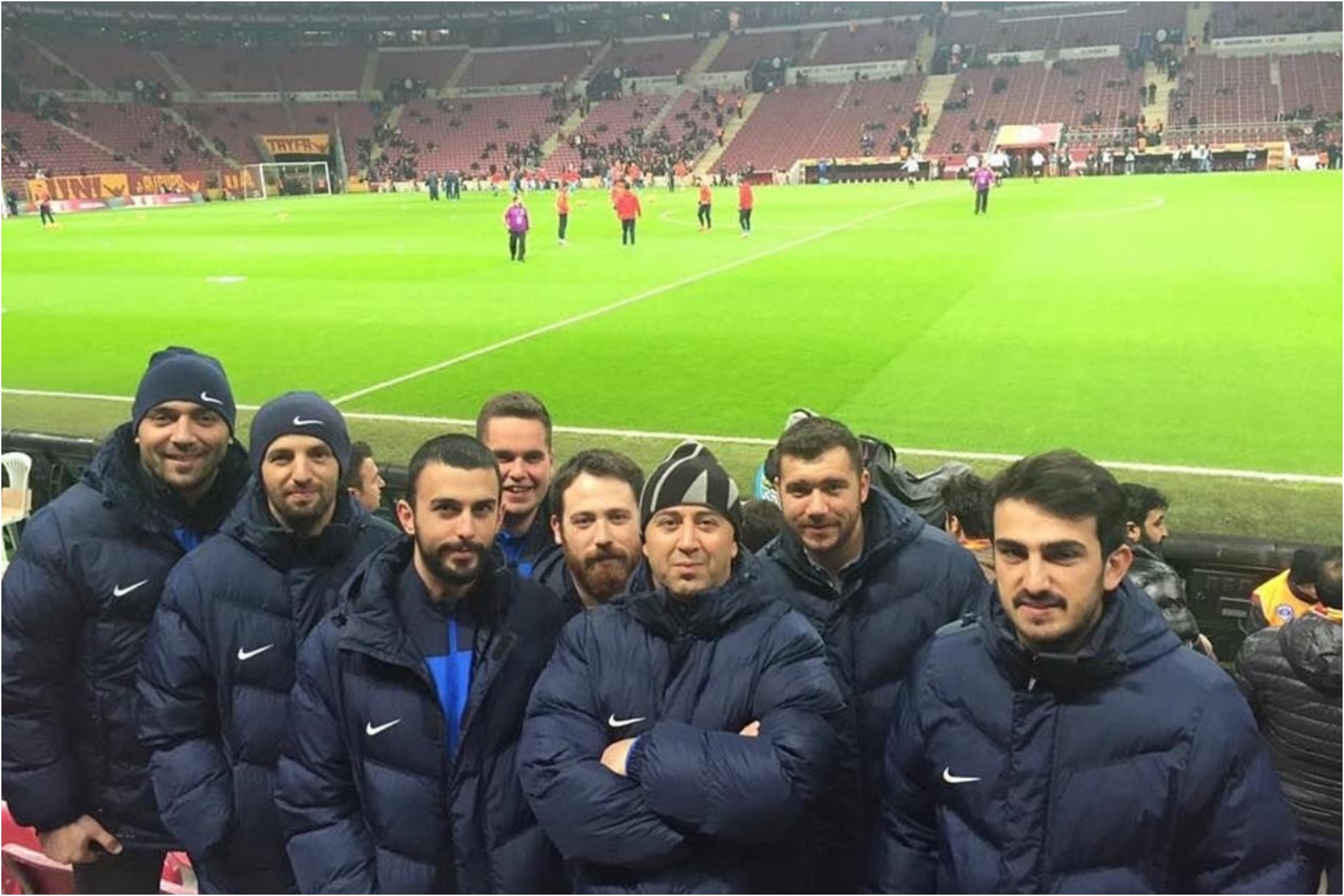
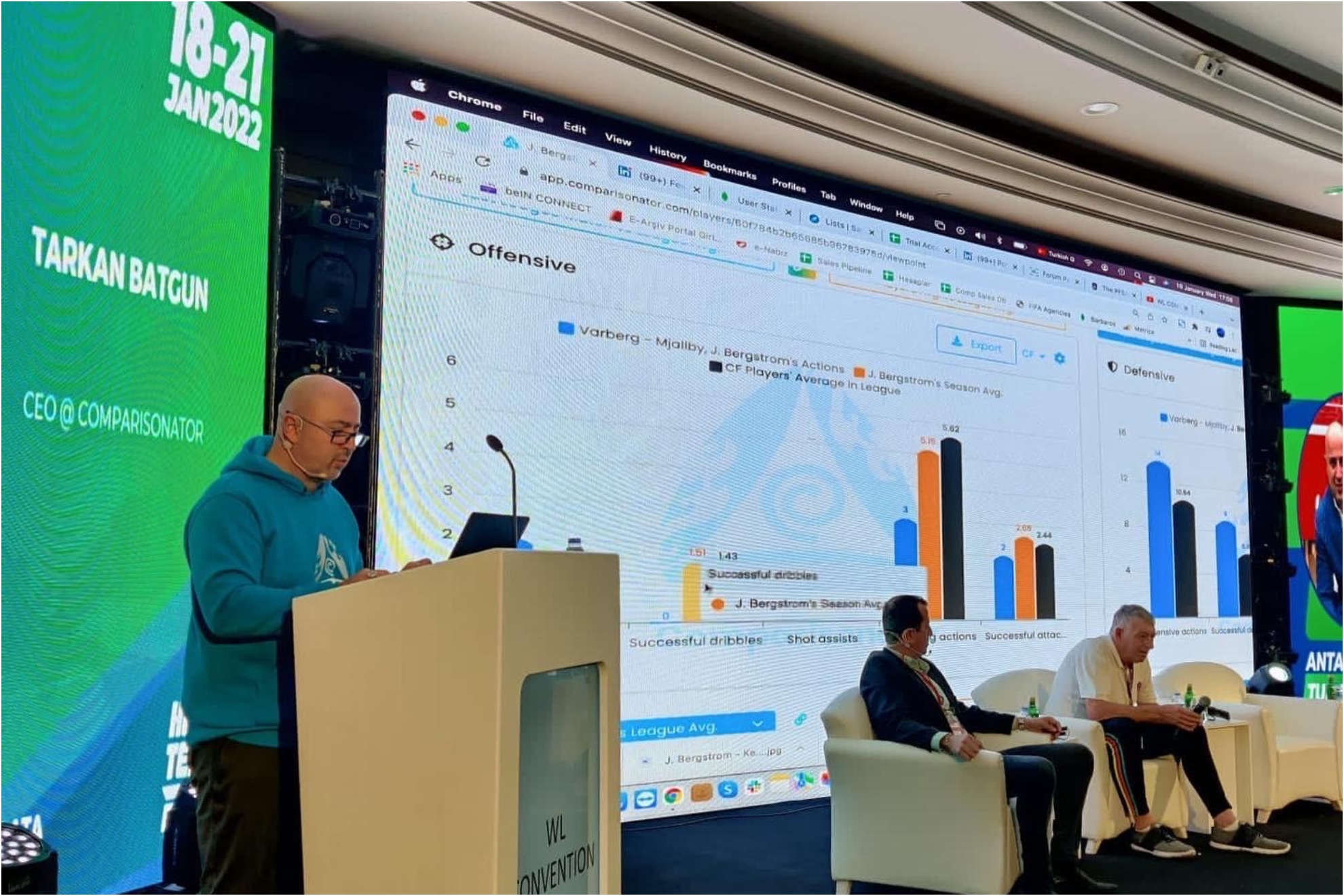
Mr. K. Tarkan Batgyun came to this interview on a special day. This match between Spain and Turkey is well known to him from his dual perspective as a global analyst and Turkish expert on artificial intelligence applied to football. He is CEO of Comparisonator (a platform that contextualizes performance, compares players across leagues and simulates how they adapt to new competitive environments) and has worked for clubs, agencies and international consulting firms. He founded Bursaspor’s Scouting Laboratory, served on the board of Altnord FK, advised companies such as YScout and SoccerLab, and was in charge of Nike Turkiye’s scouting program for six years.
From this multifaceted perspective, he argues that context is key to any data, and AI only makes sense if it helps make better decisions. In this conversation, he explains how his technology transforms soccer between leagues, detects invisible risks, and avoids million-dollar deals that could go wrong.
Japan releases shocking AI-generated video of future Mt. Fuji eruption to prevent damage
question. You’ve worked on four continents and always maintain that data without context is useless. What was the biggest culture shock that forced you to completely reinterpret your data and player profiles?
answer. In working on four continents, I learned one thing early on. That means the same number can have completely different meanings depending on where it comes from. And the biggest culture shock, the moment that really forced me to reinterpret the data, happened when I moved from structured soccer in Australia to the emotional, chaotic and intense environment of Turkey.
Let me give you a concrete example. We analyzed a good midfielder in Australia with a pass accuracy of 92-93%. In that league, this usually indicates intelligence, patience, and well-trained positional play. But when I returned to Türkiye and applied the same logic, I realized something shocking. Passers who score 92% in the Turkish league often have no creativity at all. They may simply be risk-averse, playing backwards, or releasing the ball too quickly under pressure.
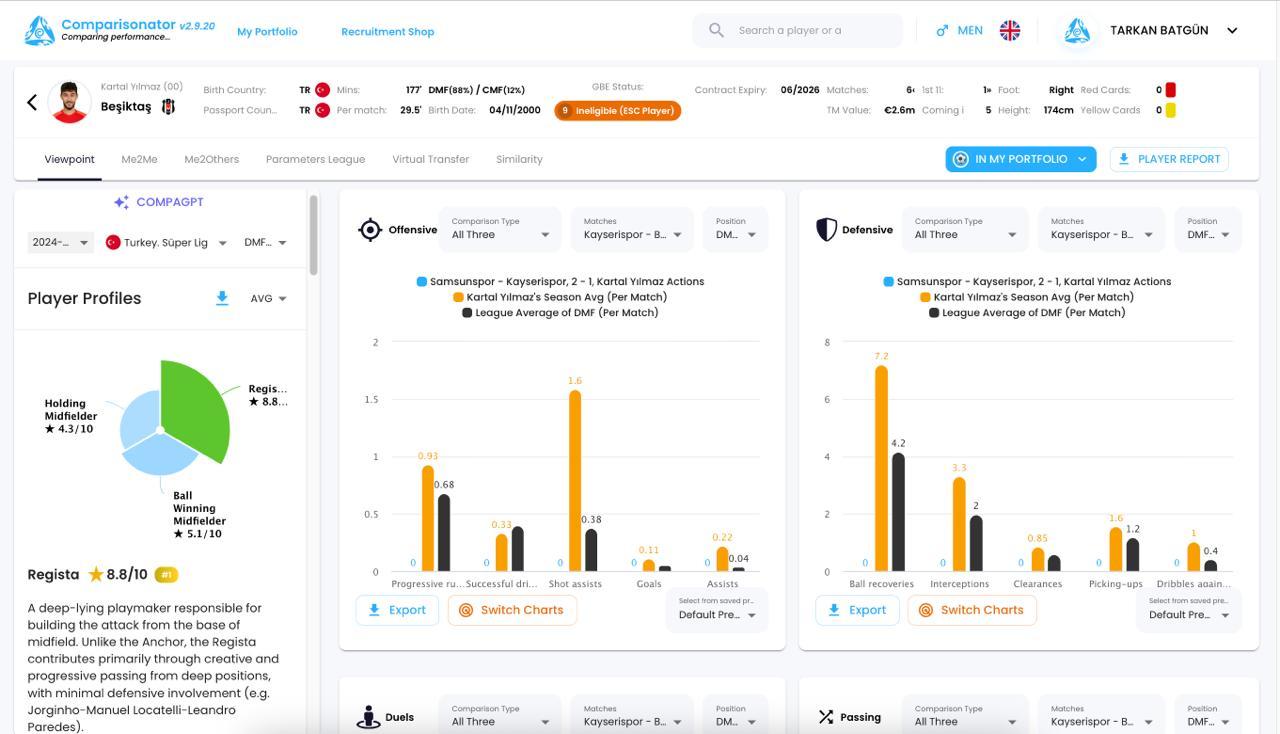
That was the moment we realized that context dictates truth, which led us to create Comparisonator as a context engine for athletic directors, coaches, and recruiters. It’s about reinterpreting numbers through the prism of league pace, adjusting performance to suit tactical style, understanding how players perform outside of their environment, and allowing clubs to assess talent globally without falling into the trap of misleading statistics.
“The same number can have completely different meanings depending on the country it comes from.”
Q: Your career has been a combination of clubs, agency, consulting, and teaching. What have you learned in each role that you now directly apply to designing artificial intelligence at Comparisonator?
A. Each stage of my career has given me a different perspective on football. All of those perspectives are now integrated directly into Comparisonator’s AI.
The club environment taught me that decision makers don’t have time. They need clarity. They don’t want “big data.” They want to know if this player fits our style. So our AI acts more like a decision-supporting advisor than a statistical machine.
From the agency world, I learned that the trajectory of the talent is just as important as the talent itself. Through consulting, we learned that each club has a different reality. That’s why Comparisonator’s AI adapts to you. We learn your club’s style, needs, and priorities and adjust our recommendations accordingly.
Through classes and conferences, I learned that understanding comes from explanations, not numbers. That’s why we created CompaGPT. This is an AI that explains soccer data to humans, just like an experienced scout or coach would.
Q. At Bursaspor, you created a “Scouting Lab.” What parts of that idea still make sense today, and what has become completely obsolete with today’s AI?
A. Thanks to my mentor Christoph Daum and his assistant Rudi Verkenpinck, the Bursaspor Scouting Lab was my first attempt at creating a systematic, evidence-based method for evaluating players. While many parts of that idea are still valid today, others have been completely transformed by modern AI. Let’s say “Scouting Lab” was the seed. The methodology (structure, clarity, collaboration) remains valid. But manual, repetitive, and subjective have all been overcome by AI. Today, Comparisonator is a scouting lab transformed into a global, dynamic, and environmentally aware intelligence engine.
Q. Many clubs believe they are leveraging data, but really they just want to confirm their preconceptions. How much noise do these biases generate in the modern scouting process?
A. Bias is the biggest hidden cost in modern scouting and creates far more noise than clubs realize. Many clubs think they are using data, when in reality they are using numbers to justify decisions that have already been made emotionally. This poses three major problems. If data is used only to confirm opinions, you won’t be able to discover new players because you won’t question first impressions and you won’t discover unexpected profiles. Confirmation bias causes clubs to ignore red flags and therefore exclude the truth. If all clubs used data to support their existing beliefs, they would lose their competitive advantage as all clubs would end up signing the same players.
“The greatest hidden cost of modern scouting is bias. Bias distorts, limits, and wastes talent.”
Q. When a comparator’s report contradicts a coach’s or head scout’s intuition, how is the conflict typically resolved? Who makes the mistake more often?
A. When the data and intuition don’t match, the first rule is simple. Don’t choose either option and do your research. Coaches see things that data doesn’t: body language, personality, behavior during training… Comparators see things that coaches don’t see: adaptation to the league, tactical stress, hidden risk signals…
In my experience, when conflicts arise, intuition often underestimates the risk due to environmental predictions (how players will adapt to the league and system). That’s exactly where Comparisonator adds value. It does not replace human judgment, but protects it from blind spots.
So who is wrong more often? The party who usually takes it out of context. And in modern football, context is non-negotiable.
Q. Standardization across leagues is one of the biggest challenges in the industry. Which competitors are showing the most “resistance” to algorithms and why?
A. The leagues that are most resistant to any algorithm are the ones where soccer is the least standardized and where pace, structure, and tactical discipline vary widely within a match.
For us, these leagues tend to be leagues with huge differences in pitch quality, unpredictable pace of play, inconsistent defensive organization, and extreme emotional momentum. The problem is standardization. Contextual intelligence is the solution.
Q. You talk a lot about the key points, trends, consistency and functional role of AI. Of all these signals, which one best predicts a player’s future progress?
A. The most reliable indicator of a player’s future progress is the consistency of their performance across different environments. Metrics about AI points, trends, and roles are important, but the real signal is whether the player continues to perform as the context changes. Different pace, different pressure, different tactical demands, different quality of opponents.
“Virtual transfers have already prevented deals that would have cost the club millions of dollars.”
Players who maintain performance in multiple environments will almost always progress. Very few players fall outside their comfort zone. That’s why Comparisonator focuses on performance stability, league transformation, adaptability metrics, and role behavior under pressure.
Q. Virtual Transfer allows you to simulate a player’s performance in another league. Are there any documented cases where this model has prevented clubs from making inappropriate contracts?
A. Yes, there are a few, but I cannot reveal the names of the clubs or players. What I can say is that virtual transfers are already saving the club millions of dollars. The recent incident involved a highly sought-after striker from the fast-paced Open League. His raw numbers were impressive: dribbling, progressive runs, expected goals…all suggested he was a must-have signing.
But when we ran him through a virtual transfer and simulated his performance in one of Europe’s top five leagues, two red flags immediately popped up. Efficiency decreased by almost 50% when defensive pressure increased, and decision-making was significantly slower in a structured tactical environment. The club canceled the transfer. Two months later, he signed with another European team, but struggled in exactly the areas our model predicted.
This is the main goal of virtual transfer. It’s not about saying “no,” it’s about uncovering the truth about how players perform outside of their comfort zones. In modern recruiting, that clarity can mean the difference between a successful deal and a very costly failure.
Q. AI platforms and models promise to eliminate bias, but they can also create bias. What is your biggest “false positive” or system failure that forced you to modify your model?
A. The biggest false positive we’ve ever had was from a player who seemed exceptional because the league environment artificially exaggerated his strengths. He played in an environment with very low defensive pressure, a lot of space, confusion in transition, and a very high ball recovery zone.
In theory, his metrics were elite. In our first model, he was very highly regarded in his position. But everything fell apart when he moved to a more structured league. Not because he lacked talent, but because his environment created a statistical illusion.
“AI doesn’t become dangerous because it makes mistakes, it becomes dangerous because it doesn’t understand context.”

That was a turning point for us. It turns out that the model requires deeper weighting. We’ve rebuilt the engine so that environmental distortion is one of the first checks on the system.
The lesson was simple. AI doesn’t become dangerous when it makes mistakes. AI becomes dangerous when it cannot understand context. This failure made the Comparisonator stronger, more cautious, and more adaptable.
Q. You have worked in undervalued markets and top leagues. What common patterns do you see among players who adapt best when faced with a sudden jump in competitiveness?
A. Across all continents, the players who adapt best after making a big leap forward in competition share the same pattern. They learn quickly and are not just fast players. Successful players are those who can quickly readjust their habits when circumstances change.
Q. More and more clubs are looking for the next Haaland before he burst onto the scene. Is it realistic to think that AI can preempt a generation of talent, or are we still looking for unicorns?
A. AI can identify abnormal patterns early, but it cannot manufacture Haaland. Generational talent is not predicted, but confirmed over time. What AI can do is recognize the warning signs that often precede a big leap forward. What makes a unicorn a unicorn is not just their metrics, but their environment, training, personality, and mindset. AI discovers possibilities. Human scouts find the destination.

Q. After 20 years in football and technology, what uncomfortable truths do you think the scouting industry needs to hear to take the next step?
A. Most clubs don’t have a scouting problem, they have a decision-making problem. Clubs collect tons of reports, videos, statistics, opinions… But when the moment of decision arrives, many clubs still make decisions based on emotion, politics, hierarchy and panic.
The next step is not adding data. It requires more discipline in how decisions are made. And that’s exactly why we created Comparisonator. Not to replace scouts, but to force decision-making to be clearer, fairer, and harder to manipulate.
