

The last time the U.S. hosted the World Cup, the U.S. Soccer Federation backed the launch of Major League Soccer two years later with an injection of cash and public excitement.
A lot has changed for the 2026 World Cup. This year’s tournament will be hosted by three countries: the United States, Mexico, and Canada. And the financial windfall will go to FIFA, which is running the tournament for the first time, rather than local organizing committees, as in 1994, when a $40 million surplus was used to fund the U.S. Soccer Foundation, the national federation’s philanthropic arm.
So what will be the legacy of the World Cup for U.S. soccer’s governing body? This non-profit organization is working on an ambitious and expansive project to elevate the game from youth to professional levels.
U.S. Soccer’s ultimate goal is to promote the sport at the youth level through schools and community programs, increase fundraising efforts, and position U.S. professional leagues and national teams for future success.
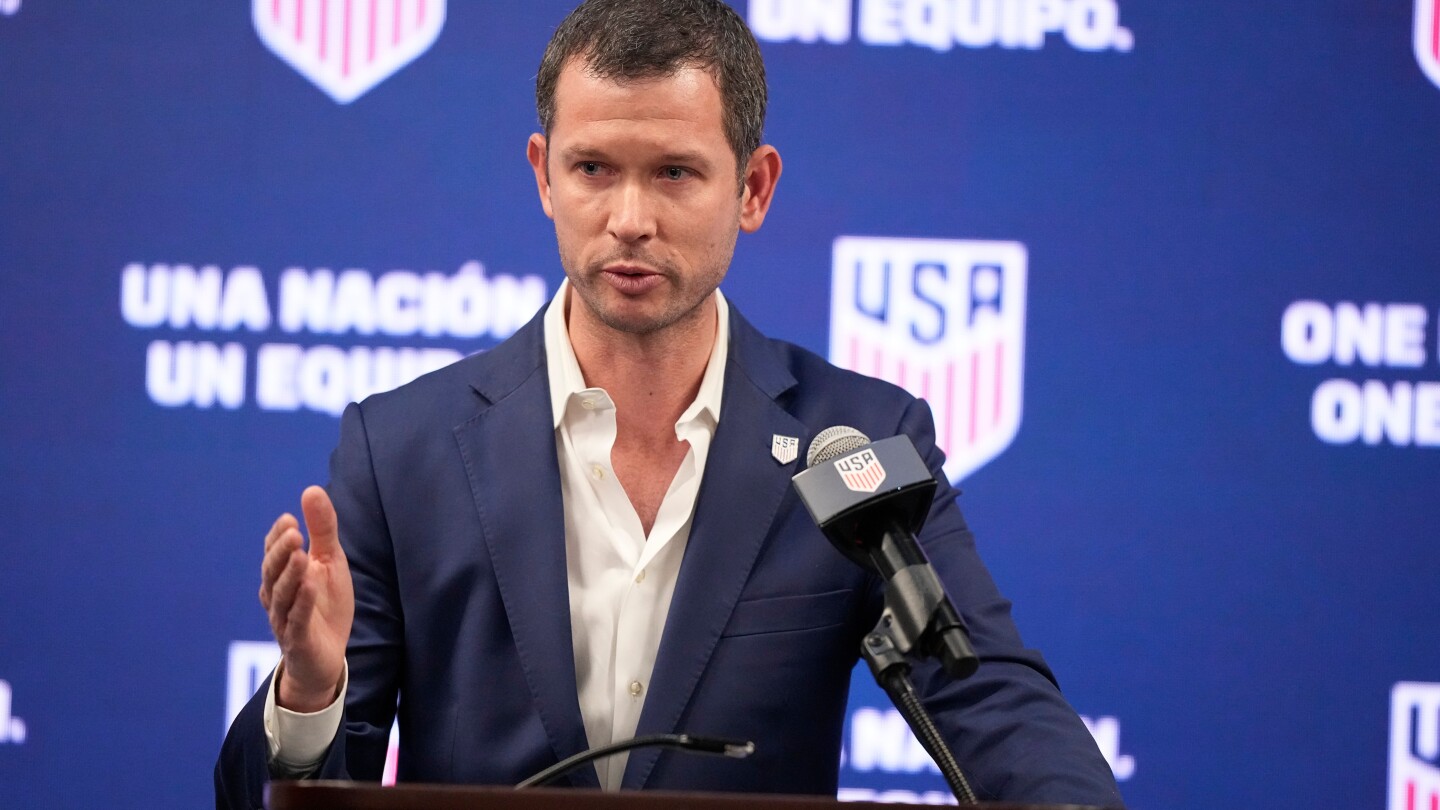
That’s a tall order, CEO JT Batson admits.
“We already have a huge driving force of people who love football in this country and an infrastructure of professional leagues and clubs and youth football across the country. This is a very strong group and if organized and supported, we can do some pretty incredible things,” he said.
Soccer Forward, the federation’s legacy project announced last year, has begun rolling out. With the motto “Soccer for Everyone, Everywhere,” we market expanded soccer programs to schools, introduce mini-fields to underserved communities, and support community-driven efforts to grow soccer at the grassroots level. This includes everything from fundraising best practices to securing grants to build soccer fields to tips for youth coaches.
The U.S. Soccer Association says such efforts are desperately needed, and one in four schools lacks an athletic program.
But it’s more than just a game, it also has health and charity elements. In October, Kansas City Current partnered with Soccer Forward to host an event at the Kansas City Women’s Preparatory Academy. More than 100 girls participated in small soccer matches and programs focused on women’s health. The girls also packed hygiene kits for women in need.
The focus on fairness in sports was supported by a $25 million donation from Michelle Kang, owner of the NWSL’s Washington Spirit, and Europe’s Lyon and London City Lionesses. This funding will be used to grow the women’s game through research and innovation projects.
Batson said the goal is “to make sure that everyone who wants to play soccer can do it, and that we can put the right resources into the game at the right level to achieve the right resources.”
This not only benefits children who want to play recreationally, but also means there is an opportunity to get future players into the game who may go on to academy, university or professional football careers.
“I think one of the big changes for U.S. Soccer is to clearly demonstrate that we are in service to soccer, and we take very seriously our role in supporting the people who make soccer life in communities across the country,” Batson said. “This is a game-changer in how U.S. Soccer views itself and the role we play for our members and everyone who loves soccer, and (we) work hard every day to earn their trust and continue that journey with us.”
Former Deloitte executive Dan Helfrich, who was hired this month as USSF’s chief operating officer, will help oversee the federation’s overarching strategy, “In Service to Soccer.”
“It is our responsibility to promote a lasting legacy from hosting the World Cup,” Helfrich said. “We take that responsibility very seriously and believe that this World Cup will have a nation-wide impact, not just sporadic impacts limited to a few communities and cities.”
To achieve these lofty goals, U.S. Soccer needs money. So the federation also hopes to capitalize on the excitement of the World Cup by launching a “Behind the Dream” campaign aimed at raising $250 million.
In many countries, governments provide financial support to sports federations. For example, the English Football Association receives funding from several government bodies, including Sport England. The United States Sports Federations are nonprofit organizations.
U.S. Soccer has focused on fundraising over the past two years. In 2023, U.S. Soccer’s spending will exceed its revenue. It has since flipped.
U.S. Soccer’s revenue for fiscal year 2025 was $257.4 million, a 36% increase from 2024, due in part to fundraising and sponsorship deals in anticipation of the World Cup.
“Thanks to financial growth, U.S. Soccer is in a fortunate position to be able to invest in its soccer strategy at a level that was unimaginable even five years ago,” Batson said. “And we’ve also been very intentional about learning from other very successful movements and saying, ‘Okay, how do we approach this in a way that leads to the outcomes that we care about?'”
___
AP Soccer: https://apnews.com/hub/soccer
