

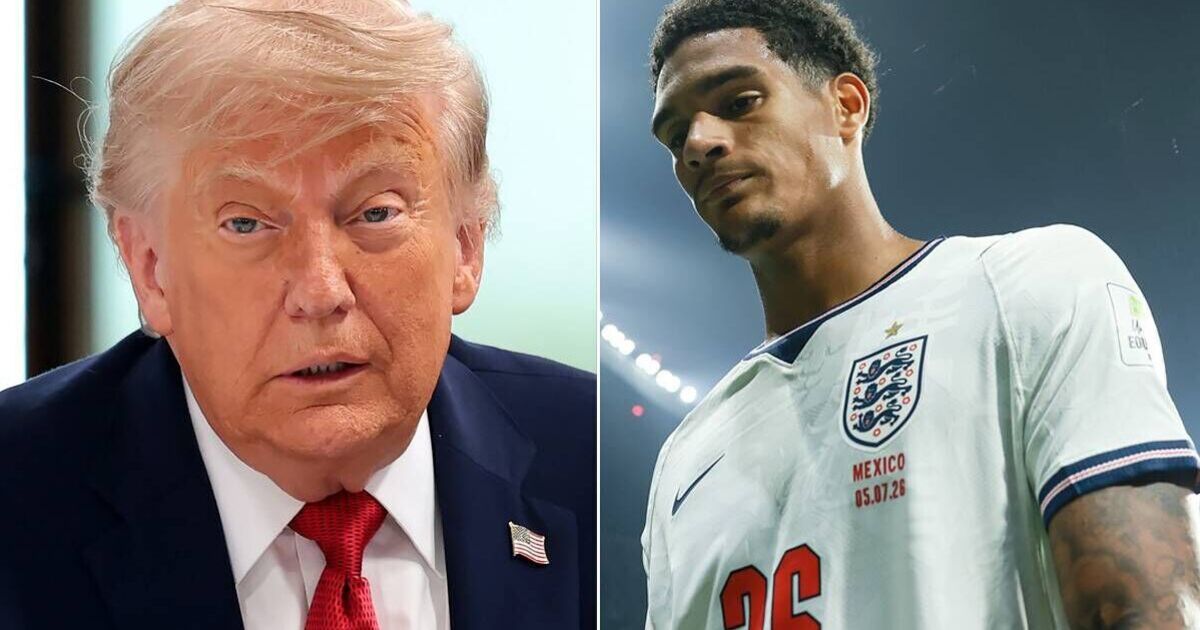
Anger over FIFA’s handling of the Folarin Balogun scandal has reignited following FIFA’s decision to suspend England defender Jarrell Quansah for two matches, with fans on social media accusing the organization of inconsistently applying disciplinary rules under political influence.
Quansah was shown a red card in the 54th minute of England’s 3-2 win over Mexico in the Round of 16 after a VAR review determined he had a high attack on defender Jesus Gallardo.
FIFA announced on Thursday that the 23-year-old would miss two games, ruling him out of Saturday’s quarter-final match against Norway in Miami, but England could face further weather-related difficulties and could potentially reach the semi-finals if the team progresses.
The timing, announced just days after FIFA decided to overturn Balogun’s one-match red card suspension following a phone call between President Donald Trump and FIFA President Gianni Infantino, has prompted accusations from fans of double standards.
“Jarrell Quansah was suspended for two games after receiving a red card against Mexico, but President Trump called out Infantino and Balogun’s red card for a career-threatening tackle was overturned,” one supporter posted on social media.
“What happens if Messi gets a red card against Switzerland? Will Millais call Trump and Trump call Infantino?”
Another supporter commented: “Really confused.” “Jarrell Quansah was given a two-match suspension, but the suspension was revoked as the American player’s red card was rescinded. With Donald Trump’s intervention, the whole situation reeks of corruption.”
Another fan called the situation “pure corruption,” while another claimed FIFA was sanctioning Quansah following British media criticism of the Balogun verdict, while allowing “political and state interference to get America’s best player out of suspension.”
England manager Thomas Tuchel also expressed dissatisfaction with the discrepancy and questioned the standards set by FIFA in Balogun’s decision.
“Where does this begin and where does it end?” Tuchel said. “Can we turn it around or not turn it around? What’s going on? Where do we draw the line is the question for me. I don’t have an answer to that.”
Unlike Balogun’s case, where FIFA waived the automatic suspension under Article 27 of the Disciplinary Act, there is no clause in FIFA’s 2026 tournament regulations allowing teams to directly challenge a red card, but the FA is said to have considered its options following FIFA’s ruling against Balogun.
Earlier this week, the French Football Federation challenged FIFA’s decision to overturn the yellow card given to midfielder Michael Olisset, but the appeal was categorically rejected.
The Express has contacted FIFA for comment via email.
The Balogun controversy has continued to affect the tournament since FIFA’s initial decision. Belgian authorities say the ruling undermines the integrity of the competition, but Infantino insists FIFA’s disciplinary committee worked independently without any political interference.
The U.S. national team then lost 4-1 to Belgium, despite Balogun being recalled to the team, resulting in an early exit from the tournament in the round of 16.
With Quansah absent and Reece James still nursing a hamstring injury, England will be without two first-choice natural right-backs for Saturday’s quarter-final, leaving Tuchel with little choice but to rebuild his defense ahead of Erling Haaland’s match against Norway.
