

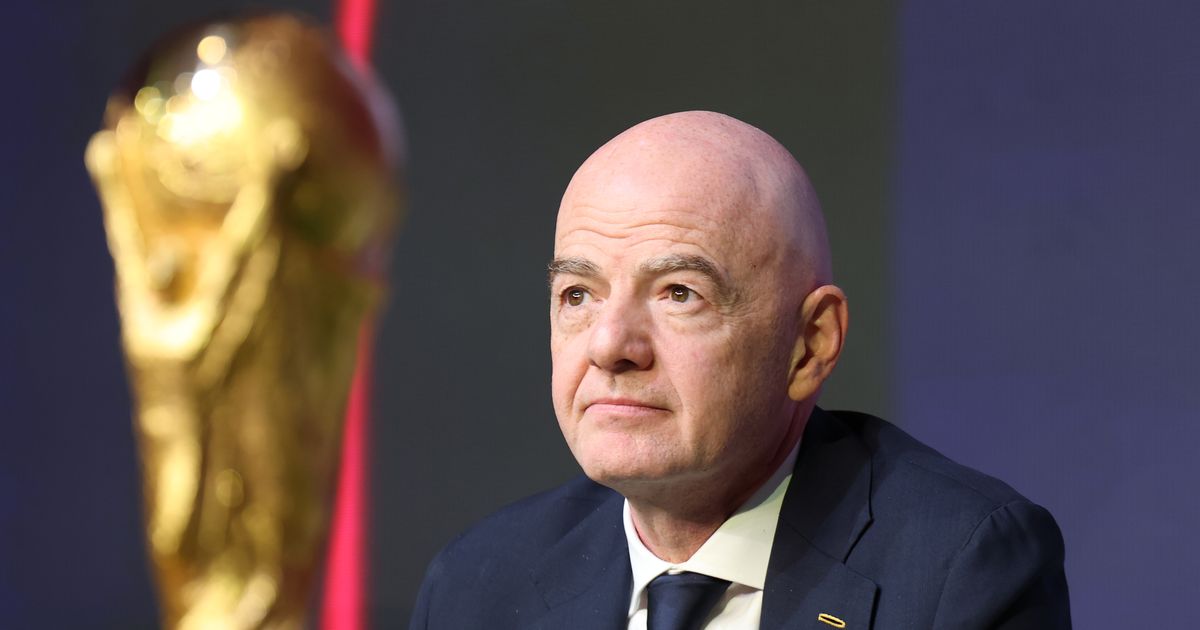
FIFA has announced significant changes to the 2026 World Cup following consultations with stakeholders and complaints from players and coaches at the Summer Club World Cup.

The 2026 World Cup will be different from previous tournaments after FIFA effectively decided to scrap the traditional 45-minute halves. Next year’s World Cup will be held in Canada, the United States and Mexico from June to July, forcing organizers to find solutions to the scorching temperatures expected in many stadiums.
In recent years, wildfires and high humidity in North America have frequently affected sporting events, and problems caused by abnormal weather have become increasingly serious. The Club World Cup was held in the United States in the summer as a prelude to the World Cup, but was disrupted by concerns over player welfare.
Players complained of dizziness during games, and the scorching heat at many of the World Cup venues left coaches with minimal training options. Some have suggested changing kick-off times or using more covered stadiums to avoid peak temperatures, but FIFA has now announced another solution.
At next summer’s World Cup, there will be a mandatory three-minute “hydration break” during the first half of each match. This means that the two 45-minute halves that fans are accustomed to will not be played, and new breaks will be required, even if temperatures are not rising.
read more: Transfer News LIVE: Mo Salah to Saudi Arabia, Manchester United’s £115m signing, Arsenal and Liverpool latest updatesread more: Liverpool star agrees with Mo Salah that he won’t be back after his outburst
Other competitions have had cooling breaks in the past, but only when temperatures reached a certain level. But this time, regardless of weather conditions, the match will be called off 22 minutes into each half. This effectively means that the 2026 World Cup will be played in quarters, similar to basketball and American football.
FIFA said the sweeping decision was taken following consultations after the weekend draw and guarantees the same playing conditions for all matches. But critics are likely to point out that it is sure to be controversial and gives advertisers new opportunities to appeal to their audiences.
Meanwhile, a three-minute hydration break is unlikely to appease the world players’ association FIFPRO, which has called for shorter and more frequent cooling breaks for matches played in high temperatures.

FIFA is trying to address problems seen at the Club World Cup in the summer, with the match kicking off at 3pm local time in scorching heat. Most games in New Jersey, Philadelphia, Miami, Kansas City and Monterrey kick off in the evening, but most afternoon games are played in air-conditioned covered stadiums or in cities with cooler climates.
However, despite mitigation measures, the problem remains and is sure to lead to further criticism of FIFA’s decision-making regarding the tournament. Campaigners have raised concerns about FIFA’s partnership with Saudi Arabian oil giant Aramco, while others have pointed out that the expansion to 48 teams and the vast distances between venues could comfortably make it the most polluting World Cup in history.
Peter Crisp of Fossil Free Football said: “It has become clear that the hottest summers ever are disrupting football’s traditional tournament model, and the 2026 World Cup will be a turning point in some way.” “Athletes exhausted from flying thousands of miles between games will struggle in the heat, surrounded by Aramco oil advertisements.”
Join our new WhatsApp community and receive Mirror Football content every day. Community members also receive special offers, promotions, and advertisements from us and our partners. If you don’t like our community, you can always check out. If you are interested, please read our privacy notice.
Sky Sports Premier League and EFL package discounts
£49
£35
sky
Get the deal here
Sky has reduced the price of its Essential TV and Sky Sports bundle ahead of the 2025/26 season, saving members £336 on their bill and offering more than 1,400 live matches from Premier League, EFL and more.
Sky will broadcast at least 215 live Premier League matches next season, with an increase of up to 100 more.
