

England and Tottenham Hotspur manager Justin Coquelin has spoken candidly about the shocking death of his wife Lee-Anne. Cochrane, who is currently assistant coach to Thomas Frank at Spurs, suffered the tragedy of losing his wife in November 2024 at the young age of 40.
The 43-year-old was still at Brentford under Frank Frank before being appointed as part of Thomas Tuchel’s England coaching team in February 2025. But even as he continues to build on his promising coaching career, he is forced to deal with the unimaginable grief of losing the mother of his three sons to a rare form of thyroid cancer. Medical experts initially told the couple that her chances of survival were extremely slim.
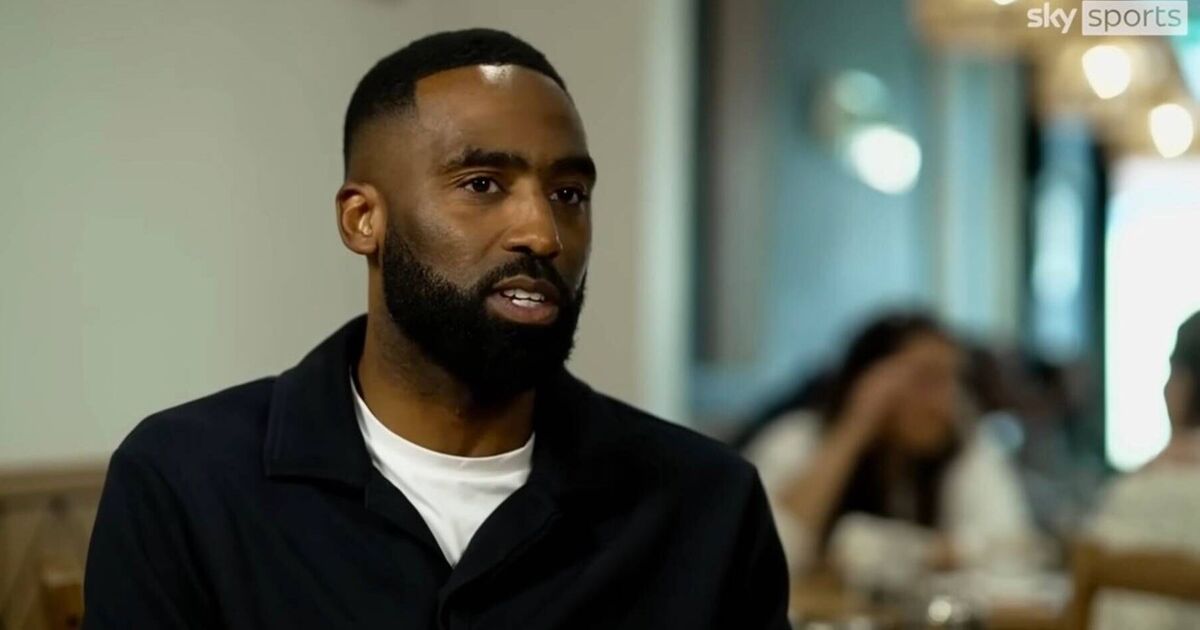
Despite receiving treatment at London’s Royal Marsden Hospital, Leanne tragically passed away just over a month later. Cochrane courageously spoke about her death in a recent interview with Sky Sports, saying: “I went from a time when everything was going smoothly to becoming a single parent and sorting out everything in my family. I’ve dealt with the shock while continuing to work, but it’s hard to put into words what I’ve been through over the last year.”
“She was a wonderful wife and mother. She was perfect for me and brought balance to our family. She supported my coaching journey and did everything she could for my children. My life was almost perfect and she was a big part of it.”
“Lee-Anne didn’t have any major symptoms of illness, but after 10 months she was gone. The decline was quite rapid and very difficult to deal with as a husband and father.
“It’s been incredibly difficult. I’ve had the support of the club (Brentford) and all the staff. I told the players quite early on that I might be missing, but everyone was very supportive. Our captain, Christian Norgaard, was fantastic throughout.
“That period was tough because there was hope that she might be able to get through this, but there was also the reality of what would happen if she left. I slept less during that time. After she passed away, I probably slept five hours, and before she got sick, when I was dealing with those thoughts, it was three hours.”
Reflecting on the first period after Leeanne’s death, the former QPR and Millwall defender continued: “I was a bit dazed, in shock, felt like I had been knocked out, but I was still on my feet. I went into support mode for my three sons, and Leeanne talked about me looking after them and myself.”
“Even though the days were tough and the nights were long, it gave me strength. Every time I got out of bed, I had to find a way to get to the end of the day, and of course some days were harder than others.
“Football could give you a release and help you. A good training session or a win at the weekend with laughter and joy might give you a bit of a boost. But then reality sets in again and you keep moving forward and find a little way.”
Mr Cochrane has set up a community bench near his home in memory of his wife, and plans to represent England at the World Cup next summer.
Nevertheless, he recalled breaking down in tears on the team bus early in his Three Lions career when a particular song came over the speakers.
“On the way to Wembley, I heard a song coming from the bus and I was with the staff for maybe five days. I just started crying. I was sitting opposite Enrique Hilario and at that moment he realized and hugged me.”
“He just saw what he needed, and I just realized it. It was fine for a few days, but that day I thought she might not be with me.”
