

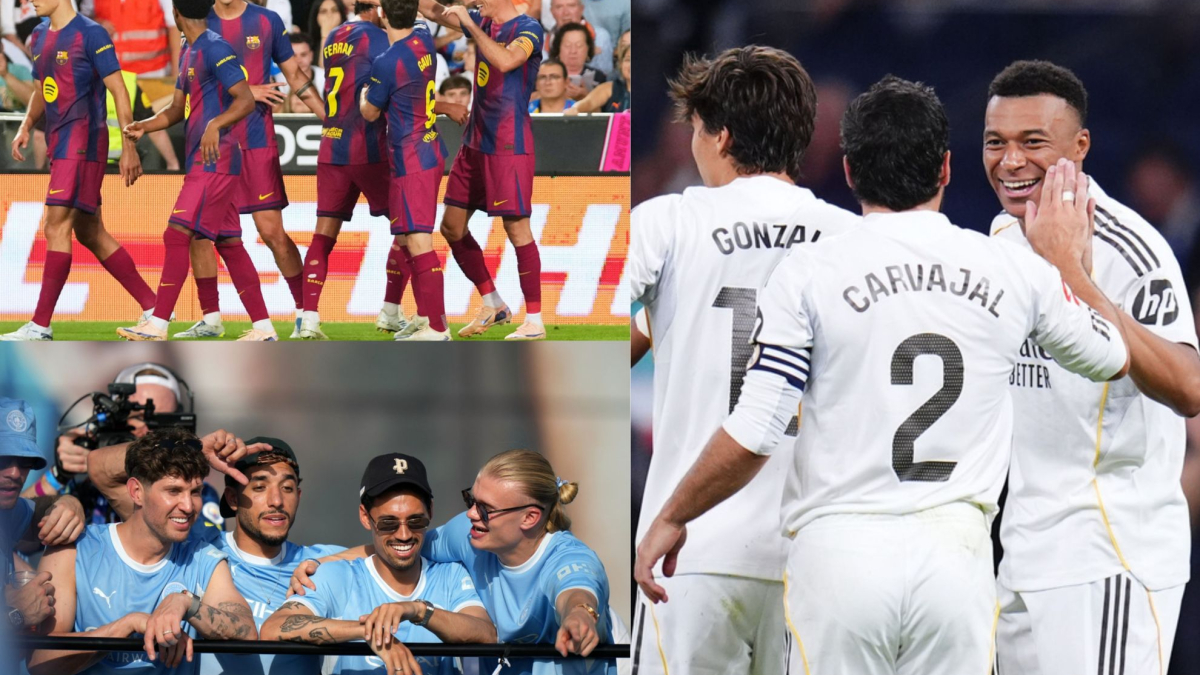
Football is no longer just about trophies and historic rivalries. Market value, revenue generation and global expansion are becoming increasingly important. And in that area, the latest snapshot of the sport reveals trends that cannot be ignored.
The latest list of the world’s most valuable clubs shows a clear concentration at the top end of the world, where a small number of teams dominate the world’s financial conversation.
Cristiano Ronaldo hilariously destroys Kylian Mbappé’s Lego in new promotional video
top of repeating pattern
The ranking places Real Madrid first in the world with a valuation of nearly $9.5 billion, followed by other historic giants of European football.
But when you look at the rest of the top 10, one thing becomes clear. Six clubs play in the same league, the Premier League, including Manchester United, Liverpool, Manchester City, Arsenal, Chelsea and Tottenham.
Is it a coincidence or the result of a model that has reshaped the scale of modern football?
The report points to a combination of factors, including global broadcast rights, consistent foreign investment and a commercial structure that allows multiple clubs to grow simultaneously within the same competitive environment.
More than just the name, the data reflects how this league has built a system that allows multiple teams to reach similar financial heights on the world stage.
In contrast, Europe’s other major leagues do not have as many representatives in the top 10, even when they include historically powerful clubs with large numbers of fans worldwide.
Markets are no longer measured only on the pitch
The average value of the world’s 30 most valuable clubs is now over $2.9 billion, growing by more than 20% over the past year.
In this sense, soccer has become more than just a sport, it has become a global market for investment and brand expansion.
And as that number continues to rise, the question becomes inevitable: Are we witnessing the beginning of a new way of understanding power in world football?
