

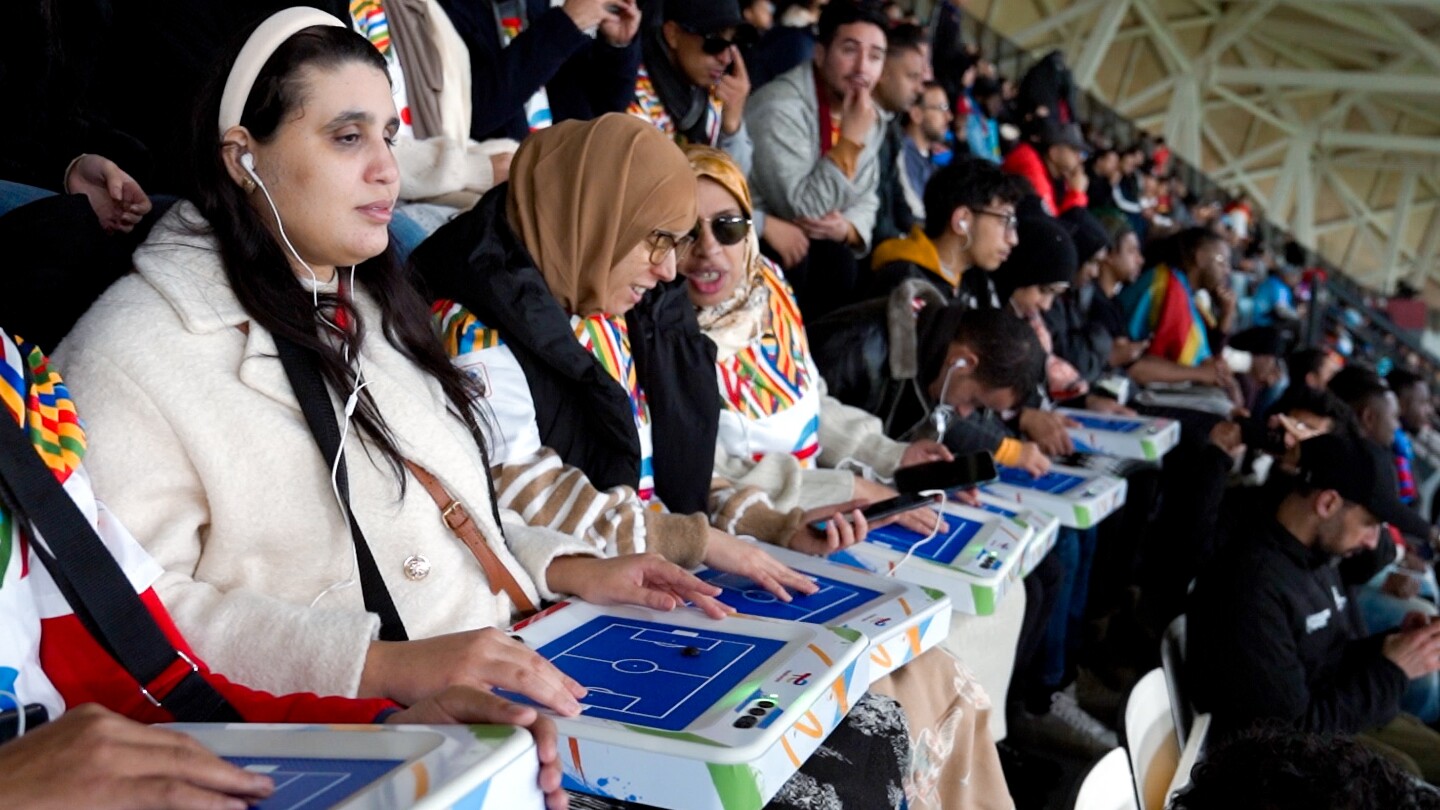
CASABLANCA, Morocco (AP) — Despite the availability of haptic devices for visually impaired supporters at the African Cup of Nations, none will be available. Morocco will play Senegal in Sunday’s final In front of up to 69,500 supporters.
In the 35th edition of the tournament, visually impaired fans were able to attend only three of the 52 matches, raising questions about claims of inclusivity and the prioritization of facilities for disabled supporters at the tournament.
“We have a continuing obligation to maintain the facilities and infrastructure that we have provided, because that is our obligation and our commitment. And we will continue to increase infrastructure facilities for all disabled supporters. This is very important,” Confederation of African Football president Patrice Motsepe said at Saturday’s closing press conference.
He gave no examples. CAF did not respond to several requests for further information.
Some have pointed out that the minimum number of fans allowed to use devices (up to 15 for each of the three games) hides a different reality.
“Many measures are presented as comprehensive, but when you look into the details, they are generally tokenistic measures designed for images and communication,” Idil Ugindi, a disability rights activist who walks with crutches, told The Associated Press.
Images of a visually impaired supporter using the device during an Africa Cup match were widely shared on social media. Moroccan media hailed the initiative as a historic step and a major step towards inclusivity in the North African country.
“It’s a positive step in the effort to show that visually impaired people can watch football matches, but I don’t think it’s accurate to call it a comprehensive decision that truly includes all those affected,” Ugindi said.
Uguindi, 30, pointed out that blind citizens in Morocco are still treated as incapacitated and often require witnesses just to open a bank account.
Mohamed El Hachimi, a blind computer science teacher, used one of the devices during one of the group stage matches between Congo and Botswana in Rabat and described it as an “extraordinary” experience.
Using a soccer field-shaped tablet made by French company Touch2See, El Hachimi was able to follow the match using a magnetic cursor that tracked the movement of the ball in real time.
“I felt like I could see the ball,” El-Hachimi told The Associated Press. “Other users said they’ll never forget that day.”
El-Hatimi said all visually impaired fans would need to be accompanied by a companion after the match. “So if 10 visually impaired fans attend, 10 companions will also need to come,” he said, adding there were also “serious resource and logistical challenges” to getting to the match.
The 54-year-old from the northwestern city of Ksar el-Kebir would have liked to have taken part in the final, but his skills are not available for the most important match of the tournament.
“There should have been more representation of blind fans in this final, where the national team is playing,” El-Hachimi said. “It would have meant a lot to us to be a part of such an important moment.”
Morocco is attracting global attention as it prepares for: Co-host the 2030 World Cup. The country uses this tournament to showcase modern stadiums and infrastructure. Off the field, the Kingdom is keen to brand itself as a model of accessibility and social inclusion.
Touch2See CEO Arthur Chazelle told the AP that he has not been approached to introduce the technology in Morocco’s domestic league or the 2030 World Cup.
Morocco’s Ministry of Family Affairs did not respond to requests for comment.
___
AP Sports Writer Ciaran Fahey contributed.
___
Associated Press on Africa Cup: https://apnews.com/hub/africa-cup-of-nations
